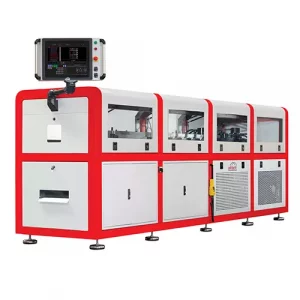
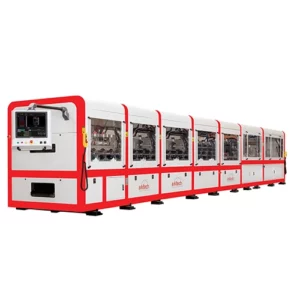
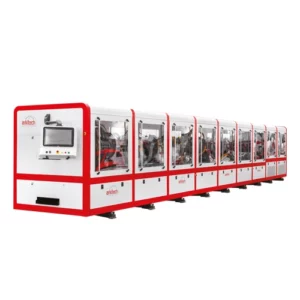


Cold-Formed Steel Framers are automated roll forming systems for industrial steel profile production, yet automation alone does not guarantee consistent output or reliability. In modern Light Gauge Steel (LGS) manufacturing, real performance depends on engineering depth, system integration, and mechanical stability working together. Without precision engineering and intelligent software integration, automation may increase speed but also amplify production errors.
The Misconception: Automation Equals Performance
Many manufacturers assume that investing in automated machinery directly improves productivity and quality. However, automation is a tool—not a performance guarantee.
In Cold-Formed Steel Framers, automation typically includes:
- Servo-driven punching systems
- Automated coil feeding
- Digital production monitoring
- Integrated cutting systems
Mechanical Architecture Defines Stability
Automation operates on top of mechanical architecture. If the mechanical foundation is unstable, automation cannot compensate. Key mechanical factors in Cold-Formed Steel Framers include:
Frame Rigidity
The structural integrity of the machine frame determines vibration resistance and long-term geometric stability. A rigid chassis reduces dynamic deflection and ensures consistent roll forming pressure distribution.
Roll Form Tooling Geometry
Tooling design must match the required profile range and material thickness. In Light Gauge Steel production, improper tooling alignment may lead to profile distortion, twisting, or dimensional drift.
Material Handling Control
Coil feeding tension, strip alignment, and progressive forming calibration must be engineered precisely. Automated feeding without proper tension control can create inconsistent profile geometry.
Automation enhances these processes, but it does not replace engineering fundamentals.
Software Integration Is More Than Digital Control
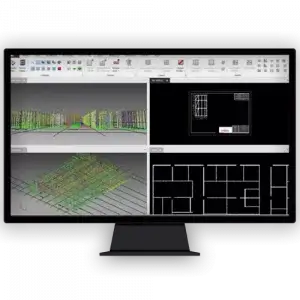
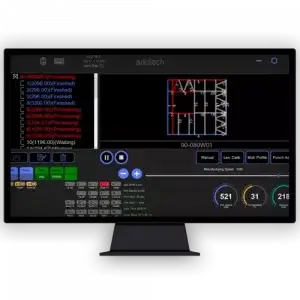
Modern Cold-Formed Steel Framers use production software to manage:
- Profile design data
- Punch sequencing and positioning
- Production speed
- Error diagnostics and material tracking
However, software must be fully integrated with mechanical systems. A disconnected architecture can lead to data delays and alignment errors.
In advanced Light Gauge Steel environments, integration between design software and framer software:
- Converts design data directly into machine commands
- Reduces data transfer errors
- Optimizes workflow
- Enables real-time dimensional control
Process Control vs. Simple Automation
Automation executes programmed movements. Process control, however, continuously monitors and stabilizes production variables.
High-performance Cold-Formed Steel Framers rely on:
- Feedback-driven servo calibration
- Adaptive punching timing
- Controlled forming pressure
- Continuous dimensional verification
In Light Gauge Steel manufacturing, production consistency directly impacts panel system performance. Even minor variations in web width or flange depth can extend assembly time.
True industrial reliability requires closed-loop control systems.
The Role of Engineering Depth in LGS Production
Light Gauge Steel systems demand high dimensional accuracy because profiles directly form structural panel systems. Misalignment at the profile level propagates through:
- Panel fabrication
- Modular assembly
- On-site installation
- Structural load transfer
Cold-Formed Steel Framers designed with deep engineering consideration incorporate:
- Structural simulation in machine design
- Precision-tuned forming stations
- Calibrated servo-driven operations
- Material behavior compensation
Automation supports these capabilities, but it cannot replace them.
Industrial Scalability Requires Integrated Systems
Manufacturers operating in Light Gauge Steel markets must respond to fluctuating demand. Scaling production involves more than increasing speed.
Cold-Formed Steel Framers that support industrial scalability integrate:
- Modular tooling configurations
- Flexible profile changeovers
- Data-driven production analytics
- Software-enabled capacity optimization
Automation increases throughput. Integrated system design enables sustainable scalability.
FAQ (Frequently Asked Questions)
- Does full automation guarantee higher profile accuracy? No. Automation improves speed and repeatability, but dimensional accuracy depends on mechanical precision, calibration, and process control.
- Why is system integration important in LGS production? Light Gauge Steel manufacturing requires direct alignment between design data and production output. Integrated software reduces translation errors and ensures structural consistency.
- Can automation reduce material waste? Automation helps reduce manual errors, but material optimization depends on tooling precision, calibration, and consistent forming geometry.
- What is the biggest risk of relying solely on automation? Without strong mechanical engineering and process control, automation may accelerate production variability rather than eliminate it.
- How do advanced Cold-Formed Steel Framers improve reliability? They combine rigid machine architecture, synchronized software systems, and closed-loop control mechanisms to ensure stable long-term production performance.
Building Performance Beyond Automation
Automation is essential in Cold-Formed Steel Framers; however, it is not sufficient on its own. Sustainable performance in Light Gauge Steel manufacturing is achieved through the combination of precision engineering, intelligent software integration, and robust mechanical design.
Contact Arkitech to transform your production line into a more stable, efficient, and long-term performance-driven operation.
Check out our LinkedIn page for more.

 by
by