

Home - Framer
Explore
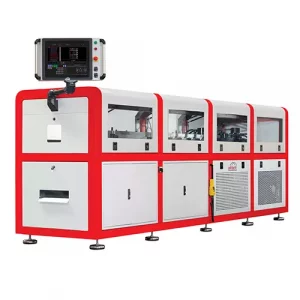
“The LGS Industry’s most cost-effective solution for Single ProfileManufacturing”
- From 0.55mm (25ga)
- To 1.2mm (18ga)
- 8 Stations
- 2 Spare Tool Station Bays
- Cost Effective

“The LGS Industry’s most cost-effective solution for Single ProfileManufacturing”
- From 0.45mm (25ga)
- To 1.2mm (18ga)
- 8 Stations
- 2 Spare Tool Station Bays
- Cost Effective
“The LGS Industry’s most cost-effective solution for Single ProfileManufacturing”
- From 0.75mm (22ga)
- To 1.6mm (16ga)
- 8 Stations
- 2 Spare Tool Station Bays
- Cost Effective

“The LGS Industry’s most cost-effective solution for Single ProfileManufacturing”
- From 0.75mm (22ga)
- To 2.0mm (14ga)
- 8 Stations
- 2 Spare Tool Station Bays
- Cost Effective

“The LGS Industry’s most cost-effective solution for Single ProfileManufacturing”
- From 1.0mm (20ga)
- To 2.5mm (12ga)
- 8 Stations
- 1 Spare Tool Station Bay
- Cost Effective

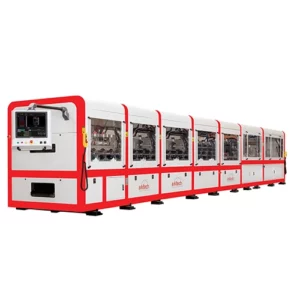
“The LGS Industry’s most cost-effective solution for Multi-ProfileManufacturing”
- From 0.75mm (22ga)
- To 1.6mm (16ga)
- 11 hydraulic station bays
- 12 tool stations
- Cost Effective

“The LGS Industry’s most cost-effective solution for Multi-ProfileManufacturing”
- From 0.75mm (22ga)
- To 2.0mm (14ga)
- 16 hydraulic stations
- 16 tool stations
- Cost Effective

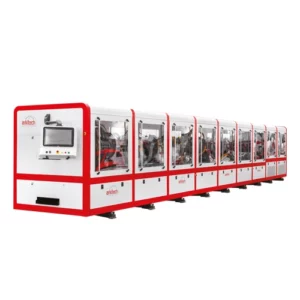
“The LGS Industry’s most cost-effective solution for Multi-ProfileManufacturing”
- From 0.75mm (22ga)
- To 2.5mm (12ga)
- 18 hydraulic stations
- 16 tool stations
- Cost Effective
“The LGS Industry’s most cost-effective solution for Multi-ProfileManufacturing for C & U, Sigma”
- From 1.0mm (20ga)
- To 3.0mm (11ga)
- 17 hydraulic stations
- Cost Effective
“The LGS Industry’s most cost-effective solution for Multi-ProfileManufacturing for C & U, Sigma, Z”
- From 1.0mm (20ga)
- To 4.0mm (9ga)
- 17 hydraulic stations
- Cost Effective
“The LGS Industry’s most cost-effective Multi-Profile Machine for a Total Roofing Solution”
- From 0.55mm (25ga)
- To 1.2mm (18ga)
- 7 stations
- 1 additional spare tool station bay.
- Cost Effective

“The LGS Industry’s most cost-effective Multi-Profile Machine for a Total Roofing Solution”
- From 0.75mm (22ga)
- To 1.6mm (16ga)
- 7 stations
- 1 additional spare hydraulic tool station bay
- Cost Effective
“The LGS Industry’s most cost-effective solution for Multi-ProfileManufacturing”
- From 0.75mm (22ga)
- To 2.0mm (14ga)
- 7 tool stations
- 2 Spare Tool Station Bays
- Cost Effective

Light Gauge Steel Framing Machine
Light gauge steel framing machine is a production system used to manufacture cold-formed steel profiles for modern construction projects. Arkitech develops light gauge steel framing machine solutions designed to support efficient, accurate and digitally integrated steel profile production. It processes galvanized steel coils and transforms them into studs, tracks, joists, truss members, and other structural framing components with accurate dimensions and repeatable production quality.
Light gauge steel framing machine technology supports prefabricated, modular, residential, commercial, and industrial building methods by connecting digital design data with automated manufacturing. This approach helps reduce manual cutting, improve production consistency, minimize material waste, and create a more organized workflow between design, factory production, and on-site assembly.
Roll Forming Machine
A roll forming machine is designed to shape steel coils through a series of roller stations that gradually form the material into the required profile. In light gauge steel framing production, this process is used to manufacture structural members with consistent geometry, accurate hole positions, and clean cutting details. Since the profiles are produced from coil material in a controlled production line, the system can be adapted to different project sizes, profile types, and structural requirements.
A modern LGS machine usually combines forming, punching, cutting, notching, marking, and labeling functions in a single production workflow. These features allow manufacturers to produce framing components according to architectural drawings and engineering calculations. Instead of preparing each profile manually on the construction site, the required members can be manufactured in advance with defined lengths, connection points, and service openings.
The main components of a roll forming production line may include:
- Decoiler unit for feeding galvanized steel coils into the system
- Leveling section for preparing the steel strip before forming
- Roll forming stations that shape the profile step by step
- Punching units for service holes and connection details
- Cutting system for producing profiles in project-specific lengths
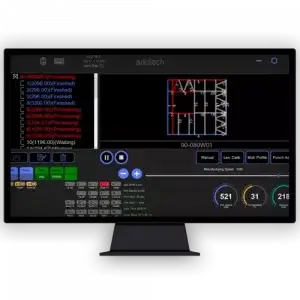
- Control panel for managing machine settings and production data
- Marking or labeling unit for easier sorting and installation
A cold formed steel framing machine works without heating the steel during the forming process. The steel is shaped at room temperature, which allows the material to maintain its structural properties while being formed into lightweight and strong profiles. This method is widely used in steel framing because it creates accurate components suitable for wall panels, floor systems, roof structures, and modular building sections.
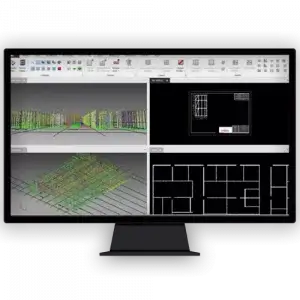
Digital integration is one of the most important advantages of this technology. Project data can be prepared through specialized design software and transferred directly to the machine control system. This allows the production team to generate material reports, organize profile sequences, and reduce the risk of measurement conflicts. When design and production data are properly coordinated, the installation process becomes more predictable and efficient.
A light steel framing roll forming machine can be configured according to different production needs. Some systems are developed for standard stud and track profiles, while others can manufacture more complex elements used in load-bearing walls, trusses, joists, and prefabricated modules. Machine capacity may vary depending on material thickness, profile dimensions, automation level, production speed, and the number of integrated processing units.
For manufacturers, choosing the right machine directly affects production flexibility and project efficiency. Automated punching and cutting functions can reduce preparation time, especially in projects with repeated framing details. In larger production facilities, multiple roll forming lines may be used to produce different profile groups at the same time. This helps manufacturers manage various project types with better coordination and shorter production cycles.
A steel framing machine also contributes to material efficiency by producing profiles according to exact project measurements. Since each component is manufactured with defined dimensions, unnecessary cutting and excess material loss can be reduced. Proper labeling and organized production also make it easier to match each profile with its correct location during assembly.
Roll forming technology continues to develop as the construction industry moves toward faster, cleaner, and more controlled production methods. With the increasing use of prefabrication, modular construction, digital modeling, and factory-based manufacturing, light gauge steel framing machines have become an important part of modern building production. When supported by suitable raw material, accurate engineering data, reliable software integration, and trained operators, these machines can create a strong production foundation for precise and efficient steel framing systems. Arkitech supports this production approach by developing integrated machine and software technologies for digital light gauge steel framing production.

 by
by