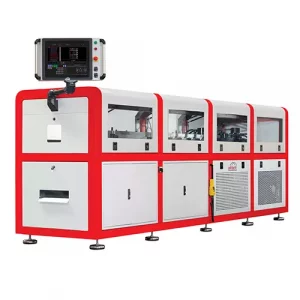
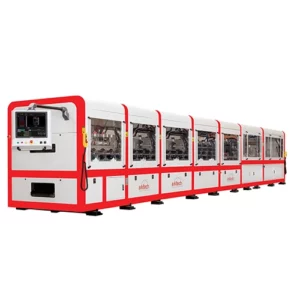
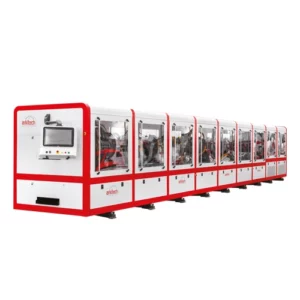
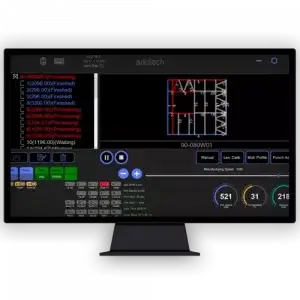


Cold-Formed Steel Framers are essential in reducing production errors in modern Light Gauge Steel (LGS) manufacturing. Automation improves speed and repeatability, but true error control depends on precision engineering, mechanical stability, and integrated software systems working together.
In high-volume light gauge steel production, even minor dimensional deviations can affect panel alignment, assembly speed, and structural reliability.
Where Production Errors Occur in LGS Manufacturing
In light gauge steel manufacturing, certain operational and technical factors can create conditions that lead to production errors.
The Root Causes of Production Errors
- Dimensional profile deviations
- Punch misalignment
- Material feed instability
- Data mismatches between design and machine
- Geometric drift during long runs
Because LGS profiles form structural panel systems, small inaccuracies in web width, flange depth, or hole positioning can cause assembly delays, rework, and increased material waste.
Advanced Cold-Formed Steel Framers are engineered to minimize these risks systematically.
Precision Roll Forming and Dimensional Control
Dimensional stability begins with roll forming accuracy. If tooling geometry is poorly calibrated or forming pressure is uneven, profiles may twist or drift from nominal dimensions.
High-performance framers reduce this risk through:
- Optimized tooling for defined profile ranges
- Balanced forming stages
- Rigid machine frames that minimize vibration
- Stable geometry during extended production cycles
In LGS manufacturing, consistent geometry eliminates manual correction during panel assembly.
Servo-Controlled Punching Accuracy
Punch positioning errors are costly in light gauge steel production. Even slight hole misalignment can disrupt structural connections. Advanced Cold-Formed Steel Framers integrate:
- Servo-driven punching systems
- Digital synchronization with design data
- Adaptive timing based on production speed
- Positional verification during operation
This ensures repeatable punching accuracy across thousands of profiles.
Integrated Software and Data Integrity
In modern LGS environments, many errors originate from disconnected systems.
Cold-Formed Steel Framers with integrated:
- Design software
- Framer software
- Production monitoring systems
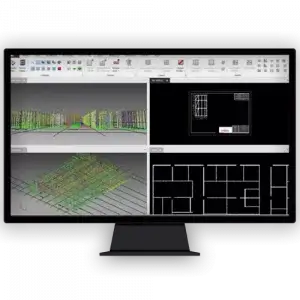
enable direct design-to-machine communication. This reduces manual data entry, prevents outdated file usage, and ensures real-time parameter validation.
In light gauge steel production, software integration is a primary defense against costly production mistakes.
Closed-Loop Process Control
Automation executes programmed actions. Closed-loop systems verify and correct them.
High-performance framers monitor:
- Forming pressure
- Punch alignment
- Dimensional output
- Speed-to-accuracy balance
When deviations occur, adaptive control recalibrates automatically. This prevents small variations from escalating into systemic defects.
Reducing Scrap and Rework
Production errors directly increase scrap rates and operational cost. Error-resistant Cold-Formed Steel Framers reduce:
- Rejected profiles
- Secondary processing
- On-site corrective adjustments
- Downtime caused by recalibration
For manufacturers operating at industrial scale, small improvements in consistency significantly enhance profitability in LGS manufacturing.
FAQ (Frequently Asked Questions)
- Do automated Cold-Formed Steel Framers eliminate all errors? No. Automation improves repeatability, but dimensional accuracy depends on precision engineering and integrated process control.
- Why is punching accuracy critical in LGS manufacturing? Because LGS profiles form structural panels, misaligned holes directly impact assembly precision.
- Can software integration reduce waste? Yes. Integrated systems prevent incorrect profile production caused by data mismatches.
- How does machine rigidity affect quality? Rigid structures reduce vibration and dimensional drift during long production cycles.
- Is error reduction financially important? Yes. Lower scrap and rework improve margins in high-volume light gauge steel production.
Take Control of Production Errors with Arkitech
Sustainable Light Gauge Steel production is made possible through the combination of mechanical precision, software integration, and closed-loop control systems. The right machine infrastructure minimizes production errors and enhances operational efficiency.
Contact Arkitech today to strengthen your production processes with a more robust engineering foundation.
Check out our LinkedIn page for more.

 by
by