

Cold-formed steel is a structural material produced by shaping thin steel sheets at room temperature through controlled mechanical processes. Unlike hot-rolled steel, it is formed without heat, allowing manufacturers to achieve precise dimensions and consistent material properties.
Thanks to its strength-to-weight ratio, design flexibility, and production accuracy, cold-formed steel has become a key material in modern construction. It is widely used in light steel structures, prefabricated systems, and modular building applications.
What Is Cold-Formed Steel?
Cold-formed steel refers to steel sections manufactured through a cold forming process, typically using roll forming or press braking methods. During this process, steel coils are shaped into structural profiles without applying heat.
The absence of heat treatment preserves the material’s mechanical characteristics while allowing manufacturers to achieve consistent geometry across thousands of produced elements.
Typical cold-formed steel profiles include:
- C-sections
- U-sections
- Z-profiles
- Sigma profiles
- Custom structural sections
These profiles are commonly used in structural panel systems, floor assemblies, wall framing, and modular construction structures.
Key Mechanical Properties of Cold-Formed Steel
Cold-formed steel is valued in construction engineering primarily because of its predictable structural performance and manufacturing accuracy.
Several mechanical characteristics make it suitable for structural use:
- High strength-to-weight ratio: Cold-formed steel profiles provide significant load-bearing capacity while remaining lightweight compared to traditional structural materials.
- Dimensional consistency: Precision manufacturing processes ensure that profile geometry remains stable and repeatable.
- Material efficiency: Because profiles are formed from thin steel sheets, material utilization is highly optimized.
- Structural reliability: Cold-formed steel behaves predictably under structural loads, which simplifies engineering calculations and system design.
These properties allow engineers and manufacturers to design structural systems that combine strength, efficiency, and manufacturing scalability.
Cold-Formed Steel in Light Gauge Steel Construction
Cold-formed steel plays a central role in Light Gauge Steel (LGS) construction systems. In these systems, structural profiles are assembled into engineered framing structures that form the load-bearing skeleton of buildings.
Common applications include:
- wall framing systems
- floor joist assemblies
- roof trusses
- modular structural frames
- prefabricated building modules
Because cold-formed steel profiles are produced with high dimensional precision, structural elements can be manufactured in controlled production environments and assembled quickly on construction sites. This manufacturing approach supports the growing demand for industrialized construction methods.
Advantages of Cold-Formed Steel in Modern Building Systems
The increasing adoption of cold-formed steel in construction is driven by several technical advantages.
Structural Efficiency
Cold-formed steel profiles allow engineers to design efficient load-bearing structures while minimizing material usage.
Speed of Construction
Prefabricated structural elements can be assembled rapidly on-site, reducing construction timelines.
Design Flexibility
Cold-formed steel profiles can be engineered for a wide range of structural configurations and architectural requirements.
Compatibility with Industrial Production
Cold-formed steel components can be produced in large volumes using automated manufacturing systems, ensuring consistent quality and repeatability.
This compatibility with industrial production processes is one of the main reasons cold-formed steel has become a preferred material in modern prefabricated construction systems.
Framer Technology in Cold-Formed Steel Production
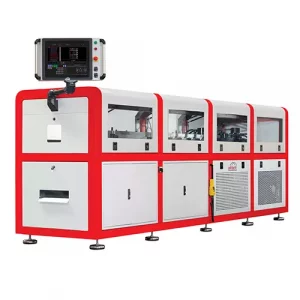
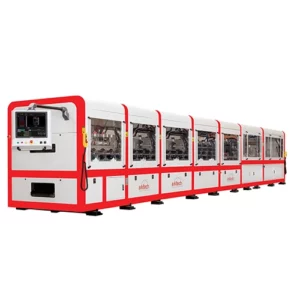
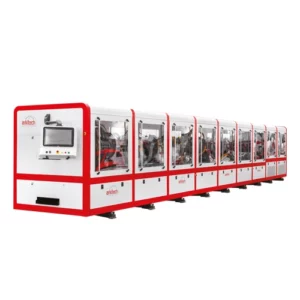
Although cold-formed steel refers to the structural material itself, the precision of the final profiles depends heavily on the manufacturing technologies used to produce them. Advanced framing systems and framer technologies enable manufacturers to transform steel coils into structural profiles with consistent geometry and repeatable tolerances.
Modern production environments combine:
- precision roll forming processes
- digital production control
- servo-controlled punching operations
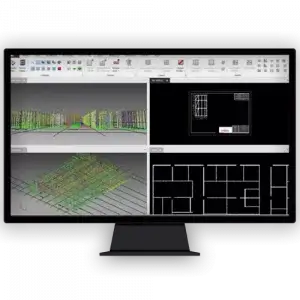
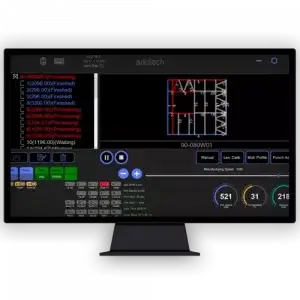
- integrated manufacturing software
These technologies ensure that the produced profiles meet engineering requirements.
Arkitech develops framer technologies and digital production solutions that combine mechanical engineering with intelligent production software. This approach helps manufacturers produce cold-formed steel profiles efficiently and at scale.
Strengthen Your Production Performance
Sustainable performance in cold-formed steel production is achieved through the combination of sound engineering, precision manufacturing technologies, and integrated software systems. For manufacturers aiming to build reliable and scalable production processes, choosing the right technology is critically important.
To achieve greater precision and sustainable performance in cold-formed steel production, explore Arkitech’s solutions and contact us.
Check out our LinkedIn page for more.

 by
by