

Cold-formed steel has become a fundamental structural material in modern construction systems. Produced through controlled cold forming processes, it enables manufacturers to create highly precise structural profiles with consistent mechanical properties.
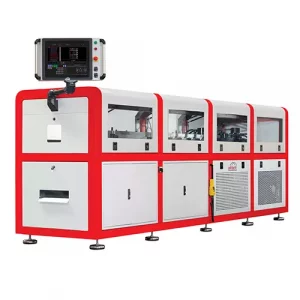
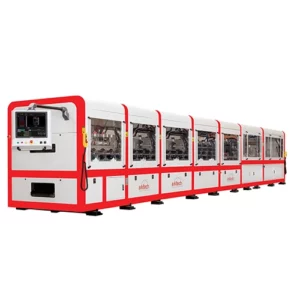
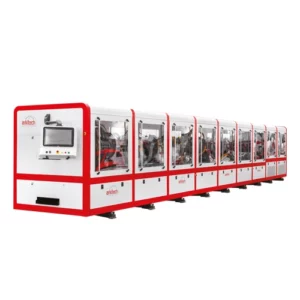
In contemporary Light Gauge Steel (LGS) construction, cold-formed steel plays a central role in enabling efficient structural design and scalable production. Arkitech develops advanced framer technologies that support precise and reliable cold-formed steel profile manufacturing.
High Strength-to-Weight Ratio
One of the most significant engineering advantages of cold-formed steel is its exceptional strength-to-weight ratio. Structural profiles can support high loads while maintaining relatively low material weight.
This characteristic provides several engineering benefits:
- reduced structural dead load
- improved transportation efficiency
- easier handling during assembly
- optimized structural performance
In LGS construction systems, this balance between strength and weight allows engineers to design efficient framing structures while maintaining structural reliability.
Dimensional Precision and Manufacturing Accuracy
Cold-formed steel profiles are produced using controlled roll forming processes, which ensure high dimensional precision and repeatability.
Consistent geometry is essential for modern construction systems where structural components must fit together with minimal tolerance variation. High manufacturing accuracy provides several operational advantages:
- precise alignment of structural profiles
- improved panel assembly accuracy
- reduced on-site adjustments
- predictable structural performance
When produced using advanced framer technologies, cold-formed steel profiles maintain stable dimensions across large production volumes. Arkitech framers are engineered to deliver this level of dimensional precision and production stability.
Predictable Structural Performance
Another important engineering benefit of cold-formed steel is its predictable behavior under structural loads. Engineers can model and calculate structural performance with a high level of confidence.
Because the material properties and profile geometries remain consistent, structural calculations become more reliable. This predictability simplifies engineering design and supports the development of standardized construction systems.
In Light Gauge Steel construction, predictable material performance is essential for designing safe and efficient load-bearing structures.
Material Efficiency and Resource Optimization
Cold-formed steel profiles are manufactured from thin steel sheets, which allows for highly efficient material utilization. Structural strength can be achieved without the need for excessive material thickness.
From an engineering perspective, this offers several advantages:
- optimized material consumption
- reduced structural weight
- improved cost efficiency in structural systems
- lower environmental impact in production
Material efficiency is one of the reasons cold-formed steel has become widely adopted in modern prefabricated building systems.
Compatibility with Industrialized Construction
Modern construction increasingly relies on industrialized manufacturing methods. Cold-formed steel is particularly compatible with this production model.
Structural profiles can be manufactured in controlled production environments using automated systems and advanced framer technologies. This enables manufacturers to produce consistent structural components at high volumes.
Industrial compatibility provides several strategic advantages:
- scalable production capacity
- consistent component quality
- faster construction timelines
- reduced on-site labor requirements
These factors contribute to the growing adoption of cold-formed steel in modular construction and prefabricated building systems.
Integration with Digital Design and Production Systems
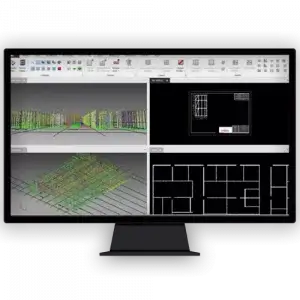
Modern construction projects rely heavily on digital design environments. Cold-formed steel systems integrate efficiently with advanced design software and digital production workflows.
Design data can be translated directly into production parameters, enabling manufacturers to produce structural profiles with high precision.
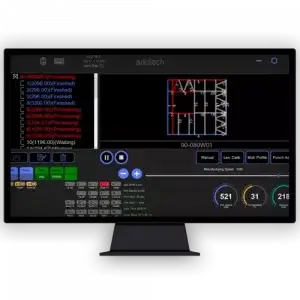
In advanced manufacturing environments, cold-formed steel production often integrates:
- design software
- framer software
- digital production monitoring
- automated profile manufacturing
This integration improves production accuracy while reducing the risk of manual errors.
Engineering Reliability in LGS Construction Systems
Cold-formed steel is widely used in Light Gauge Steel construction systems because of its reliability and structural efficiency.
In LGS applications, cold-formed steel profiles form the structural framework of buildings, supporting components such as:
- wall framing systems
- floor joist structures
- roof framing assemblies
- modular building frames
Because these structural systems rely heavily on dimensional accuracy and predictable material performance, cold-formed steel provides an ideal engineering solution.
Strengthen Structural Engineering with Cold-Formed Steel
Cold-formed steel offers significant engineering advantages in modern construction, combining structural strength, dimensional precision, and efficient material utilization.
To learn how advanced framer technologies support efficient cold-formed steel production, explore Arkitech’s solutions and contact us.
Check out our LinkedIn page for more.

 by
by