

Cold-formed steel has become a core material in modern construction systems due to its dimensional precision, structural efficiency, and compatibility with industrial production. Produced through controlled cold forming processes, it enables manufacturers to create standardized structural profiles that can be used across a wide range of applications.
In today’s Light Gauge Steel (LGS) ecosystem, cold-formed steel is not only a material choice but also a system enabler. Its applications extend from residential structures to large-scale industrial projects, supporting both prefabricated and modular construction approaches.
Structural Systems That Define Performance
One of the primary applications of cold-formed steel is in structural framing systems. Profiles produced through cold forming processes are used to create load-bearing frameworks that define the structural integrity of buildings.
Common structural applications include:
- Wall framing systems
- Floor joist structures
- Roof truss assemblies
- Structural panel systems
Because these profiles are manufactured with high dimensional accuracy, they fit together with minimal tolerance variation. This reduces on-site adjustments and improves overall assembly efficiency.
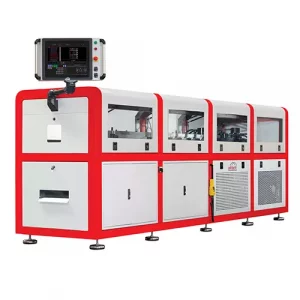
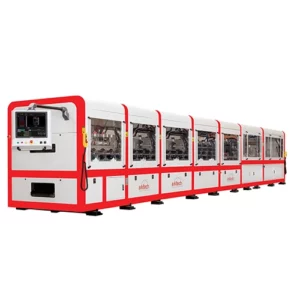
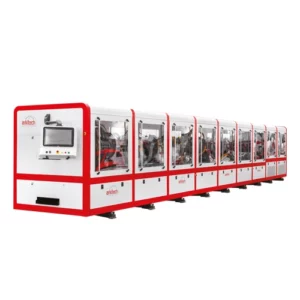
In LGS-based systems, consistent profile geometry is critical. Even small deviations can affect panel alignment and structural performance. For this reason, the production process—often supported by advanced framer technologies—plays a key role in ensuring reliable structural outcomes.
Residential and Commercial Building Applications
Cold-formed steel is widely used in both residential and commercial construction projects. Its lightweight nature combined with high strength allows for efficient structural design without compromising durability.
Typical applications include:
- Residential housing projects
- Multi-storey buildings
- Commercial buildings
- Prefabricated offices
In these applications, cold-formed steel supports faster construction timelines by enabling off-site production and rapid on-site assembly. This approach is particularly valuable in projects where time, cost control, and consistency are critical.
Manufacturers using integrated production systems—supported by Arkitech framer solutions—can produce profiles with repeatable accuracy, ensuring smooth installation across different project types.
Modular and Prefabricated Construction Systems
Cold-formed steel is one of the core materials in modular and prefabricated construction systems. These systems are based on preparing structural components in controlled production environments and assembling them rapidly on-site.
Applications in this area include:
- Modular Structural Profiles
- Prefabricated Wall Panels
- Bathroom Pods
- Volumetric Modular Building Systems
Thanks to standardized and precisely manufactured profiles, modular construction systems achieve high compatibility and fast assembly.
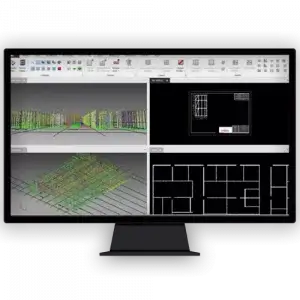
In such production processes, integration between design and manufacturing becomes critical. Advanced machine-based production systems ensure that each profile is produced in accordance with design data.
Industrial and Large-Scale Applications
Cold-formed steel is not limited to residential and commercial buildings; it is also widely used in large-scale industrial projects.
These applications include:
- Industrial Buildings
- Industrial Storage Units
- Warehouse Structures
- Warehouse and Industrial Structural Frames
In such projects, structural strength and production continuity are essential. Cold-formed steel meets these requirements while also ensuring material efficiency.
Production processes supported by high-performance machine technologies enable increased production capacity while maintaining consistent quality in large-scale projects.
Role in Light Gauge Steel (LGS) Systems
Cold-formed steel is the foundation of Light Gauge Steel construction systems. In LGS applications, structural profiles form the skeleton of panel systems that are later assembled into complete building structures.
The success of LGS systems depends on:
- Dimensional accuracy
- Consistent profile geometry
- Reliable structural performance
- Integration between design and production
This is where production infrastructure becomes critical. While cold-formed steel defines the material, framer systems define how precisely that material is transformed into usable structural components.
Arkitech develops advanced framer technologies and digital production solutions that support this transformation, enabling manufacturers to produce cold-formed steel profiles efficiently and at scale.
Why Application Accuracy Matters
Across all applications, the performance of cold-formed steel depends on how accurately profiles are produced and how consistently they are applied within structural systems.
Inaccurate profiles can lead to:
- Misalignment during assembly
- Increased installation time
- Material waste
- Structural inconsistencies
For this reason, modern construction workflows rely on precise production environments supported by integrated software and engineering-driven framer systems.
Achieve True Performance in Production
Real performance in cold-formed steel is defined not only by the material, but by production precision. When supported by the right technologies, manufacturing processes deliver more reliable and scalable structural outcomes.
Explore Arkitech solutions and contact us to strengthen your production.
Check out our LinkedIn page for more.

 by
by