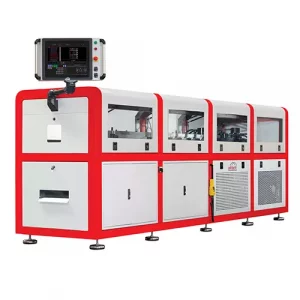
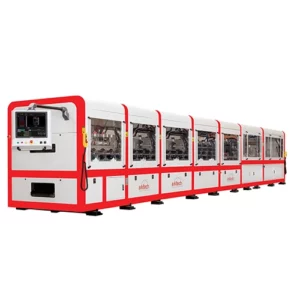
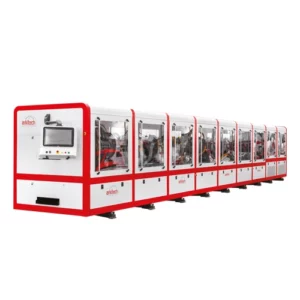


Choosing the right cold-formed steel production system is a critical decision that directly impacts production quality, operational efficiency, and long-term scalability.
In modern Light Gauge Steel (LGS) environments, production systems must deliver not only speed, but also dimensional accuracy, repeatability, and integration with digital workflows. Selecting the wrong system can lead to inconsistent profiles, increased waste, and costly production delays.
For manufacturers aiming to build reliable and scalable operations, the selection process must be based on engineering criteria—not just automation level.
Define Your Production Requirements First
Before evaluating any framer system, manufacturers must clearly define their production scope and technical requirements.
Key considerations include:
- Profile types and geometry range
- Material thickness range
- Production volume targets
- Required punching and cutting operations
- Integration with design and production software
A cold-formed steel production system must align with both current needs and future scalability goals.
Mechanical Precision Over Automation Alone
Automation improves speed, but precision defines quality. A high-performance framer must be built on a stable mechanical foundation.
Why Mechanical Design Matters
Critical mechanical factors include:
- Frame rigidity to minimize vibration
- Roll forming accuracy across stations
- Tooling compatibility with profile range
- Stable material feeding systems
Without strong mechanical engineering, automation can amplify inconsistencies instead of eliminating them.
Evaluate Dimensional Accuracy and Tolerance Stability
In LGS production, dimensional consistency is essential. Profiles must maintain stable geometry across long production cycles.
Even minor deviations in:
- Web width
- Flange depth
- Hole positioning
can affect panel alignment and structural performance.
Advanced cold-formed steel framers are designed to maintain tight tolerances and repeatable results across thousands of profiles.
Integration with Design and Production Software
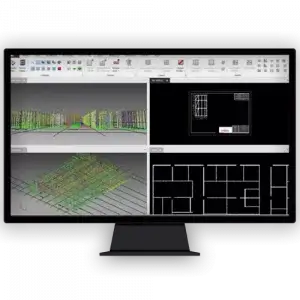
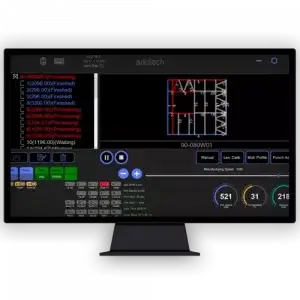
Modern production systems are no longer isolated machines. They are part of a fully integrated digital workflow.
Design-to-Production Continuity
An effective system should integrate:
- Design software
- Framer software
- Production monitoring systems
This integration allows design data to be directly converted into machine parameters, reducing manual input errors and improving production accuracy.
Process Control and System Intelligence
High-performance systems go beyond basic automation. They incorporate process control mechanisms that continuously monitor and adjust production variables.
Key capabilities include:
- Real-time dimensional verification
- Adaptive punching control
- Servo-driven synchronization
- Feedback-based calibration
Closed-loop control systems ensure consistent output and prevent small deviations from becoming systemic errors.
Flexibility and Scalability in Production
Production requirements evolve over time. A suitable framer system must support flexibility without compromising stability.
Important features:
- Modular tooling configurations
- Fast profile changeover capabilities
- Support for multiple profile types
- Scalable production capacity
Cold-formed steel production systems that combine flexibility with precision enable long-term operational efficiency.
The Role of Engineering Expertise in System Selection
Selecting a production system is not just a technical decision—it is an engineering decision.
Manufacturers should evaluate:
- System design philosophy
- Mechanical engineering depth
- Software integration capability
- Long-term reliability
Arkitech develops advanced framer systems and integrated production solutions that combine mechanical precision with intelligent software infrastructure. This approach enables manufacturers to achieve consistent, high-quality cold-formed steel production at scale.
Make Your Production Line More Efficient
Choosing the right cold-formed steel production system requires a balance between precision, integration, and scalability. The most effective solutions are those that combine strong mechanical architecture, advanced framer technologies, and intelligent production systems.
To build a more reliable and efficient production line, explore Arkitech’s solutions and contact us.
Check out our LinkedIn page for more.

 by
by