

Growth Drivers, Risks, and Strategic Opportunities
The global cold-formed steel construction market is entering a decade of structural expansion. Depending on how the category is drawn, the narrower cold-formed steel segment is valued at $17–21 billion in 2025, while the broader light gauge steel framing market, covering complete framing systems for residential, commercial, and industrial buildings, ranges considerably higher. Across both definitions, analysts converge on a compound annual growth rate of 5–7% through 2033.
Urbanization, an acute global housing deficit, a deepening skilled-labour crisis, and the industry’s pivot toward speed, sustainability, and digitalization are converging to make light gauge steel one of the fastest-growing structural systems worldwide.
Yet the opportunity is not without friction. A new wave of steel tariffs has reset input-cost assumptions across the supply chain, building-code complexity continues to slow adoption in some markets, and an aggressive cross-laminated timber sector competes for the same sustainability-driven demand. For contractors, developers, architects, and investors, the LGS and LGSF market represents a rare convergence of macro tailwinds and technology maturity. But the advantage will accrue to those who understand the terrain, and who can close the capability gaps that still separate the industry’s potential from its practice.
A multi-billion-dollar market accelerating on multiple fronts
Market sizing for cold-formed steel varies with scope, and the spread is worth understanding before drawing strategic conclusions. The narrower cold-formed steel market, structural framing products specifically, was estimated at $17.13 billion in 2025, with Grand View Research projecting growth to $28.06 billion by 2033 at a 6.7% CAGR. A parallel estimate from Business Research Insights places the 2024 market near $19.5 billion, rising toward $30.77 billion by 2033 at 5.2%.
The broader light gauge steel framing and cold-formed steel frame markets, encompassing complete framing systems, sit in the $14–15 billion range in 2025 by Data Insights Market and Archive Market Research, each forecasting a 6% CAGR toward $20–25 billion by 2033. Across the full range of definitions, the consensus growth rate clusters between 5.1% and 6.7%, a tight band given the divergence in absolute sizing.
Building & construction accounted for 49.9% of cold-formed steel revenue in 2025; Asia Pacific held the largest regional share at 41.1%.
Two structural facts anchor the demand picture. The building and construction segment dominates, driven by structural framing, wall studs, roofing systems, floor joists, and pre-engineered buildings, per Grand View Research. And demand is geographically concentrated in Asia Pacific, propelled by rapid urbanization and large-scale infrastructure investment across China, India, Japan, and Southeast Asia, with China the single largest national market in the region.
Growth driver one: the housing deficit and the speed imperative
The most durable tailwind behind light gauge steel is the global housing shortfall colliding with an industry that can no longer build fast enough. Light gauge steel directly addresses the speed constraint. Because components are prefabricated off-site with high dimensional precision, there is no waiting for concrete to cure, and on-site assembly is dramatically compressed: installation can be up to 50% faster than conventional methods, according to Prefabex. Workers assemble pre-cut steel sections with screws and bolts, reducing reliance on wet trades like concrete and plaster.
This speed advantage is no longer a niche selling point. It has become a strategic response to an industry-wide capacity ceiling, one the labour crisis makes unavoidable.
Growth driver two: the skilled-labour crisis
The construction labour shortage has shifted from a cyclical complaint to a structural emergency. In the United States alone, the Associated Builders and Contractors estimates the industry must attract 349,000 net new workers in 2026, climbing to 456,000 in 2027 as spending growth resumes, per Construction Dive.
The root cause is demographic, not cyclical. The National Centre for Construction Education and Research projects that 41% of the current construction workforce will retire by 2031, with one in five workers already over 55, as reported by CIC Construction. Residential timelines that once averaged six to eight months are now stretching to nine to twelve, per Construction Owners.
Wages cannot solve this alone. As Bluebeam frames it, training takes years and skilled labour is geographically sticky, making compensation “table stakes, not a silver bullet.” The same analysis argues that 2026 marks the start of an “efficiency mandate,” in which each worker must effectively perform the work of 1.2 to 1.5 traditional workers or projects slip.
This is the gap industrialized, prefabricated light gauge steel is positioned to fill. The global modular and prefabricated construction market, valued at $173.5 billion in 2025, is forecast to exceed $300 billion by 2035, in part because off-site fabrication directly mitigates on-site labour dependence.
Growth driver three: sustainability and ESG compliance
Buildings account for nearly 40% of global CO₂ emissions, as cited by the World Green Building Council via Infinite Stars, placing the materials decision at the centre of the decarbonization agenda.
Steel is 100% recyclable and reusable without degradation in quality, distinguishing it sharply from concrete, whose recycling is more difficult and whose cement production carries a far higher carbon footprint, per Birkbeck Structures. On the waste side, precision prefabrication cuts material waste by up to 70% versus traditional construction, per Prefabex, with some manufacturers reporting over 99% material utilization.
These attributes translate into green-building credits: cold-formed steel systems contribute toward LEED, ICC-700, ASHRAE 189.1, and IgCC certifications, as documented by Scottsdale Steel Frames. For developers and investors facing tightening ESG disclosure and green-financing conditions, this profile is increasingly a precondition for capital rather than a marketing differentiator.
Regional dynamics: one material, four demand stories
Although the growth drivers are global, their weighting differs sharply by region. A strategy calibrated to one market will misfire in another.
North America is defined above all by the labour shortage and tariff-driven cost pressure, pushing developers toward prefabrication as a productivity lever. Europe is led by ESG mandates and energy-efficiency regulation, where recyclability and lifecycle performance increasingly govern procurement. The Middle East is propelled by mega-projects and rapid urbanization, rewarding speed and repeatability at scale. Asia Pacific, the largest market, runs on sheer housing demand and infrastructure expansion. The same steel profile answers four different questions depending on where it is deployed.
Risks: external shocks and an internal constraint
Steel price volatility and the tariff shock. The most immediate risk is input-cost volatility, amplified by trade policy. In June 2025, Section 232 tariffs on imported steel and aluminium doubled from 25% to 50%, and in April 2026 the framework was restructured to apply the duty to the full customs value of covered articles, not merely their metal content, per Congress.gov and White & Case.
The downstream effect has been substantial. Steel mill products rose over 20% year-over-year as of January 2026, per Ram Steel, and construction input prices surged at a 12.6% annualized rate in early 2026, the fastest pace since 2022, per Construction Owners. Yet the strategic implication cuts both ways: tariffs raise the cost of steel, but they raise the value of using less of it more efficiently. Material optimization becomes more valuable, not less, in a high-tariff environment.
Code complexity and timber competition. Building codes and cold-formed steel design standards vary across jurisdictions and keep evolving, creating friction for firms operating across markets. Meanwhile, cross-laminated and mass-timber systems court the same green demand, often with a stronger sustainability brand. Light gauge steel’s counterarguments, including non-combustibility, dimensional stability, resistance to warping, pests, and moisture, and a 50-plus-year service life, are strong, but they must be actively made rather than assumed.
The internal constraint: a specialist-talent gap. One persistent obstacle is internal to the industry: a shortage of experienced cold-formed steel engineers and designers. While demand for LGS and LGSF grows, many engineering teams still lack specialized expertise. That raises the importance of intuitive software platforms and standardized digital workflows that encode best practice, letting smaller or less-specialized teams produce work that once required scarce experts.
Strategic opportunities: where the value concentrates
Three opportunity zones stand out.
Industrialized off-site construction. As the modular market’s trajectory toward $300 billion suggests, firms that integrate LGS and LGSF into digital, factory-based production, rather than treating it as a one-off site method, capture the largest share of the labour-and-speed advantage.
Emerging and infrastructure markets. Asia Pacific’s dominance and the Middle East’s growth signal where volume is migrating. Public infrastructure, including schools, hospitals, and social housing, suits the repeatable, fast, resilient profile of steel framing.
Software and data as the differentiator. This is the least mature and most defensible opportunity. The structural advantages of light gauge steel are well understood; what remains underdeveloped is the digital layer that converts those advantages into reliable, optimized, code-compliant projects at scale.
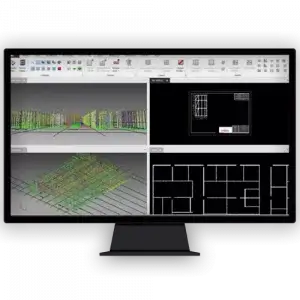
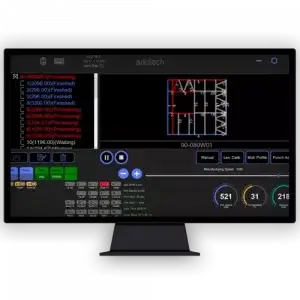
That digital layer is concrete, not abstract. It begins with design-to-manufacturing automation, where a structural model flows directly into CNC-ready production data without manual re-entry; BIM integration that keeps architecture, engineering, and fabrication working from one source of truth; automatic quantity take-offs that turn a model into a costed bill of materials in minutes; and revision management that propagates a single design change across drawings, take-offs, and machine files at once.
Layered onto these are a second tier of capabilities: manufacturing optimization to maximize material utilization, error reduction through automated clash and constructability checks, and digital twins that carry a building’s data forward into operations and full lifecycle management.
The role of AI
Written in 2026, no honest account of this trajectory can omit artificial intelligence, not as hype, but as an accelerant. AI is rapidly moving from experimentation into engineering workflows, automating repetitive detailing, optimizing framing layouts, identifying constructability issues, and improving manufacturing planning. As these capabilities mature, software shifts from a convenience to a competitive differentiator, and the gap between firms that adopt it and those that don’t will widen accordingly.
From a material problem to a software problem
Consider a mid-rise residential developer facing labour shortages and rising steel prices. Traditional workflows often require multiple disconnected software platforms, manual detailing, and repeated revision cycles between engineering and manufacturing, where each handoff is a chance to lose time, material, and margin. An integrated LGS and LGSF workflow collapses that friction: it reduces coordination effort, shortens fabrication lead times, and improves material utilization, turning a sequence of error-prone handoffs into a single continuous data flow.
This reframes the entire opportunity. The industry’s challenge is no longer convincing stakeholders that light gauge steel works. That argument has largely been won. The challenge is executing projects with consistency, speed, and manufacturing precision at scale. That is increasingly a software problem rather than a material problem.
Where Arkitech is building
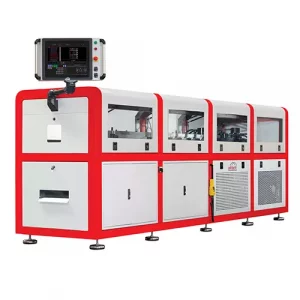
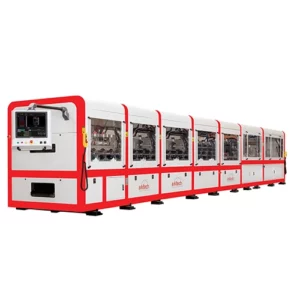
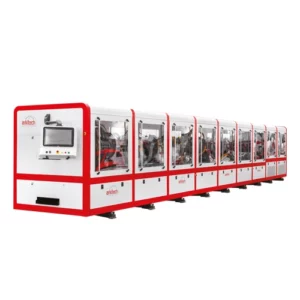
This is the gap Arkitech is built to close. By developing products and software that advance LGS and LGSF technology, from structural optimization and integrated cost modelling to interoperability and lifecycle data management, Arkitech positions itself not as another fabricator, but as the technology layer that lets the rest of the ecosystem realize what the material already makes possible. By connecting structural design directly to manufacturing, Arkitech reduces manual data transfer between engineering and production, helping eliminate rework while accelerating fabrication readiness.
The tariff environment rewards material efficiency. The labour crisis rewards automation and prefabrication intelligence. The ESG mandate rewards lifecycle data. The specialist-talent gap rewards software that encodes expertise. Each pressure points toward the same conclusion.
As construction becomes increasingly industrialized, competitive advantage will belong to organizations that connect engineering, manufacturing, and project delivery into a single digital workflow. In that environment, software is no longer supporting steel. It defines how efficiently steel can be used.
Arkitech’s mission is to provide that digital foundation for the next generation of light gauge steel construction.
The future of cold-formed steel will not be defined solely by stronger materials or faster machines, but by the intelligence that connects engineering, manufacturing, and construction into one continuous digital process. That is the future Arkitech is building toward.
References
- Grand View Research — Cold-formed Steel Market Size, Share | Industry Report, 2033 — https://www.grandviewresearch.com/industry-analysis/cold-formed-steel-market-report
- Grand View Research (Press Release) — Cold-formed Steel Market Size To Reach $28.06Bn By 2033 — https://www.grandviewresearch.com/press-release/global-cold-formed-steel-market
- Business Research Insights — Cold-Formed Steel Market Size, Share, Industry Report — https://www.businessresearchinsights.com/market-reports/cold-formed-steel-market-122961
- Data Insights Market — Cold Formed Steel Frame Market 2025-2033 — https://www.datainsightsmarket.com/reports/cold-formed-steel-frame-1122836
- Archive Market Research — Cold Formed Steel Frame Market — https://www.archivemarketresearch.com/reports/cold-formed-steel-frame-418261
- Construction Dive — Construction’s new worker demand drops to 350,000 in 2026 — https://www.constructiondive.com/news/labor-demand-gap-shrinks-abc-construction-staff/810681/
- CIC Construction — Half a Million Short: The Construction Workforce Crisis — https://cicconstruction.com/blog/half-a-million-short-the-construction-workforce-crisis-reshaping-project-delivery/
- Construction Owners — Construction Workforce Crisis Deepens in 2026 — https://www.constructionowners.com/news/construction-workforce-crisis-deepens-in-2026-amid-labor-shortages-and-ice-raids
- Bluebeam — Why 2026 Forces Construction Efficiency — https://blog.bluebeam.com/efficiency-mandate-2026-construction-labor-shortage/
- Infinite Stars / World Green Building Council — Eco-Friendly Prefab Light Gauge Steel Structures — https://www.starscontainerhouse.com/news/eco-friendly-prefab-light-gauge-steel-structures/
- Birkbeck Structures — Light Gauge Steel Framing Solutions — https://www.birkbeck-structures.com/construction-capabilities/light-gauge/
- Prefabex — Light-Gauge Steel Framing for Lighter Structures — https://www.prefabex.com/posts/light-gauge-steel-framing-for-lighter-structures-strength-speed-and-sustainability-in-modern-construction
- Scottsdale Steel Frames — Innovative Applications of Light Gauge Steel Frame Construction — https://www.scottsdalesteelframes.com/uncategorized/innovative-applications-of-steel-frames-in-modern-construction
- Congress.gov (CRS) — Section 232 Tariffs on Steel and Aluminum — https://www.congress.gov/crs-product/IN12519
- White & Case LLP — United States modifies steel, aluminum, and copper Section 232 tariffs — https://www.whitecase.com/insight-alert/united-states-modifies-steel-aluminum-and-copper-section-232-tariffs
- Ram Steel — How Steel & Aluminum Tariffs Are Affecting Prices in 2026 — https://ramsteelco.com/blogs/news/how-steel-aluminum-tariffs-are-affecting-prices-in-2026-and-how-to-keep-your-project-on-budget
- Construction Owners — 50% Metal Tariffs Hit Construction Costs — https://www.constructionowners.com/news/50-metal-tariffs-hit-construction-costs
- Research and Markets — Light Gauge Steel Framing Market Outlook, 2030 — https://www.researchandmarkets.com/reports/6175011/light-gauge-steel-framing-market-outlook

 by
by