

1. Introduction: The Evolution of Industrial Building Envelopes
The optimization of the building envelope through cold-formed precision is the primary mechanism for meeting the "fast-track" demands of modern industrial construction. As the requirements for massive logistics hubs and manufacturing plants escalate, the industry is increasingly prioritizing material systems that offer greater logistical agility than traditional tilt-up concrete or heavy hot-rolled structural steel. Strategic material selection is no longer a secondary concern; it is a fundamental driver of project lifecycle efficiency.
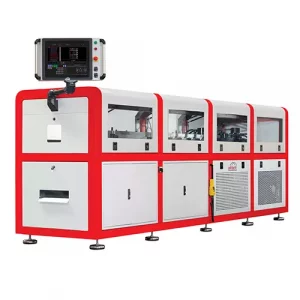
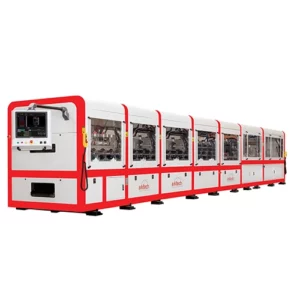
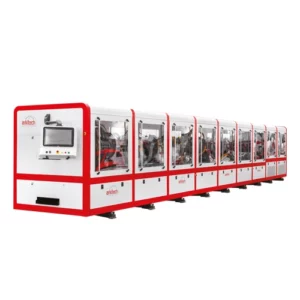
Cold-formed steel (CFS) is defined by its production process: structural-quality sheet steel is shaped into C-sections, Hat-sections, and other precise profiles using roll-forming machines at ambient temperatures. This method differs significantly from hot-rolled steel, resulting in a material with a superior strength-to-weight ratio and exceptional dimensional stability. For structural engineers and developers, CFS represents a transition from simple commodity framing to a highly engineered, integrated structural system.

2. Modern CFS Applications in Industrial Framing
Industrial facilities require framing solutions capable of managing substantial vertical and lateral loads without the burden of excessive self-weight. CFS is now routinely implemented in tall load-bearing wall applications that were historically the exclusive domain of concrete. A definitive case study is the Sunset & Decatur Industrial Park, an engineering feat by Industrialized Construction Solutions where Tori Contracting utilized 287 tons of CFS. The project successfully deployed prefabricated load-bearing panels reaching heights of 35 feet, effectively replacing traditional tilt-up concrete while meeting stringent energy and installation standards.
In roof and floor assemblies, CFS trusses are challenging the market dominance of traditional open-web steel joists. By utilizing advanced roll-forming technology from providers like Scottsdale Construction Systems, engineers can design trusses with C-sections or Hat-sections that achieve spans comparable to hot-rolled alternatives.
| Comparison Vector | Traditional Steel Joists | CFS Trusses |
|---|---|---|
| Lead Times | Often exceed several months | Produced in days or weeks |
| Self-Weight | Heavier profiles; higher foundation loads | Lighter; minimizes crane requirements |
| Customization | Limited by standardized SJI profiles | High flexibility for unique spans/pitches |
This structural skeleton is completed by essential components such as portal frames, purlins, and girts. These members are critical in industrial hubs, as they provide the necessary rigidity for attaching specialized cladding systems in high-velocity wind environments.
3. The Efficiency Engine: BIM Integration and Prefabrication
Digital integration serves as the technical backbone for high-velocity industrial projects. Don Allen, P.E., S.E., a consultant for the Steel Framing Industry Association (SFIA), emphasizes that the precision of modern roll-forming has bridged the gap between design intent and field execution.
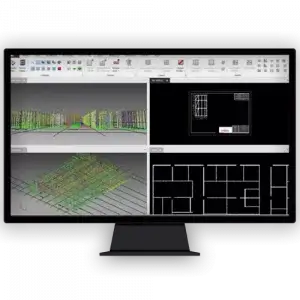
Building Information Modeling (BIM) is the catalyst for this precision. Utilizing the "Level of Development" (LOD) framework, project teams transition from LOD 300 (precise geometry) to LOD 400, which provides fabrication-ready details including part numbers and connection information. This LOD 400 precision is exactly what enables the 90% reduction in onsite framing labor seen in panelized systems. It allows for absolute clash detection between CFS assemblies and mechanical, electrical, and plumbing (MEP) runs before fabrication begins. Furthermore, this technology has matured to support rapid-response sectors and defense applications, where real-time coordination and mobile roll-forming compress construction timelines to unprecedented levels.
4. Material Performance: Resilience, Safety, and Sustainability
The inherent properties of steel provide a robust risk-management framework for industrial assets. From a sustainability perspective, steel produced in Electric Arc Furnaces (EAF) contains a minimum of 25% recycled content and is 100% recyclable at its end-of-life. This circularity significantly lowers the embodied carbon of the structure, aligning with modern ESG mandates for developers.
Structural resilience is verified by rigorous data reported by BuildSteel.org. In a landmark 2025 test conducted by UC San Diego and Cal Poly, a 10-story CFS-framed building remained structurally intact after 18 simulated earthquakes and a subsequent controlled burn. This noncombustibility is a decisive advantage in catastrophe-exposed regions. Climate resilience is further evidenced in the Gulf Coast, where the South Central Planning and Development Commission has adopted steel framing to resist hurricanes, termites, and salt-air corrosion, ensuring the long-term viability of the building asset.
5. The Logistical and Financial "So What?": Economic Impact
The financial advantages of CFS are rooted in its high strength-to-weight ratio, which leads to lower foundation loads and reduced reliance on heavy-capacity crane handling. Panelized CFS systems can enclose a building up to 75% faster than traditional methods, accelerating the path to revenue generation for the owner.
The most immediate financial impact is found in insurance premiums. Switching from wood or combustible framing to noncombustible CFS has been documented to yield an 80 percent reduction in builder's risk premiums—in one case dropping from $450,000 to $92,000. These savings directly improve project ROI. Projects like the "Eagles Landing" veteran retreat demonstrate that even complex structures can be reassembled with extreme speed using systems from Scottsdale Construction Systems, providing a clear economic mandate for the industrial sector.
6. Conclusion: A Data-Driven Mandate for Industrial Developers
Modern CFS is no longer merely a substitute material; it is a comprehensive system for optimizing the industrial project lifecycle. By combining BIM-driven LOD 400 precision with the inherent resilience of steel, developers can achieve shortened schedules, lower insurance costs, and superior circularity. As standards evolve, resources from the SFIA and the technical directories on BuildSteel.org provide the roadmap for engineers to leverage CFS for maximum competitive advantage. For the modern developer, the shift toward cold-formed steel is a data-driven strategy for structural and financial success.
References:
- Mark L. Johnson, "10 Advanced Uses for Cold-Formed Steel Framing," Walls & Ceilings / BuildSteel.org
- U.S. Naval Postgraduate School & Navy Expeditionary Combat Command, "Cold Formed Steel Frame Construction System for Commercial, Residential, and Industrial Projects"
- Don Allen, P.E., S.E., Executive Director of the Steel Framing Industry Association (SFIA), featured in "New Opportunities and Trends in Cold-Formed Steel"
- Steel Framing Industry Association (SFIA), "Technical Guide for Cold-Formed Steel Framing Products" & "Design Guide for Cold-Formed Steel Purlin Roof Framing Systems"
- Metl-Span, "CFR Insulated Metal Roof Panel - Architectural Design Guide"
- BuildSteel.org, "BIM for Cold-Formed Steel Framed Projects: Benefits, Drawbacks, and How to Succeed"

 by
by