

The Carbon Case, the Reporting Case, and the Evidence Behind Both
Light gauge steel is cold-formed structural steel framing that has become one of the most defensible material choices for developers and contractors pursuing sustainable construction and credible ESG performance. It does not, on its own, make a project or a company ESG compliant, and no material can. Its case rests instead on three properties that survive scrutiny: near-total recyclability, high material efficiency, and factory precision that removes waste from the build.
Light gauge steel and light gauge steel framing (LGS and LGSF) are entering the ESG conversation at the moment the conversation itself is shifting. The built environment is responsible for roughly 37 percent of global energy and process related carbon emissions, and as operational emissions fall under tightening energy codes, the embodied carbon locked into materials becomes the decisive battleground. For developers, contractors, senior engineers, and the investment committees underwriting their assets, this is no longer a reputational side issue. Whole life carbon reporting, product level environmental declarations, and green financing conditions are turning material choice into a reporting and cost of capital question. What matters, though, is not only choosing a material with a strong sustainability profile, but ensuring that profile survives the journey from design into a manufactured building. This article sets out where light gauge steel genuinely earns its place in that picture, where the advantage has to be engineered rather than assumed, and how the evidence holds up against the regulations now in force.
Why embodied carbon is now the decisive question
For two decades, sustainable construction was primarily an operational story about insulation, glazing, and heating systems. That framing is now obsolete. According to the United Nations Environment Programme, the buildings and construction sector accounts for around 37 percent of global energy and process related carbon dioxide emissions and nearly half of all raw material extraction. Crucially, UNEP projects that as buildings become more energy efficient, operational emissions will fall from roughly 75 percent of the sector total toward 50 percent, pushing embodied carbon in materials into the foreground. Cement and steel together account for a large share of that embodied footprint, which is precisely why material selection has become a boardroom concern rather than a specification detail.
This reframing changes how a material like light gauge steel should be judged. A per kilogram carbon figure taken in isolation is misleading, because it takes no account of how much material a structure actually needs. Steel is carbon intensive per tonne, yet a steel framed structure uses far less mass than concrete for equivalent performance, and a lighter superstructure reduces foundation loads in turn. The only valid basis for comparison is a whole building life cycle assessment, and it is on that basis that the sustainability argument for LGS and LGSF becomes serious.
The market is moving in step with the science. McKinsey estimates that the built environment is directly or indirectly responsible for around 40 percent of carbon dioxide from fuel combustion and roughly a quarter of global greenhouse gas emissions, that more than half of built environment emissions can be abated with existing technology by 2030, and that decarbonization could unlock between 800 billion and 1.9 trillion dollars in new value. Sustainable construction is no longer a compliance cost to be minimized. It is a value pool to be captured, and material strategy is central to it.
The environmental case for light gauge steel
The sustainability credentials of light gauge steel are strongest where they are most measurable. Three properties do the real work: circularity, material efficiency, and the waste reduction that comes from manufacturing off-site. Each is supported by evidence that is independent of the steel industry’s own advocacy, which matters for an audience trained to discount vendor claims.
Circularity: steel’s strongest sustainability card
Steel is among the most recycled materials on earth, and it can be recycled indefinitely without any loss of structural properties. The American Institute of Steel Construction reports that around 98 percent of structural steel is recovered and recycled at the end of a building’s life, a recovery rate that few competing structural materials approach. Recycling steel emits only a fraction of the carbon of primary production, and design for disassembly extends the benefit further: because steel framing is screwed and bolted rather than cast, it can be demounted and, in part, reused directly rather than remelted. One life cycle study found that accounting for easy, total disassembly improved environmental performance by up to 24 percent.
One caveat belongs here for the sake of credibility. The 98 percent figure applies to structural steel; recycling rates for lighter cold-formed stud scrap are lower, and honest reporting distinguishes the two rather than conflating them. Even at the more conservative figure, steel remains a genuinely circular material in an industry where circularity is otherwise scarce.
Material efficiency and off-site waste reduction
The second advantage is that light gauge steel wastes very little of what it uses. Because components are cut and formed to precise tolerances in a factory rather than on a site, off-site manufacturing sharply reduces the material sent to landfill. The independent evidence here is unusually consistent. A 2024 study in the ASCE Journal of Management in Engineering comparing 59 building cases found that modular construction reduced overall construction waste by close to 80 percent on average, outperforming every other method studied. A separate peer-reviewed analysis in Buildings found that modular approaches cut waste weight by up to 83 percent, and multiple case studies report an average reduction of around 52 percent from prefabrication.
These figures describe modular and off-site construction as a category, not light gauge steel in isolation, and the distinction matters for an honest claim. What can be said is that light gauge steel enables these highly controlled off-site workflows and can therefore participate directly in the waste reductions they deliver. Because components are cut and formed to precise tolerances before they reach the site, less material is over-ordered and less is bought only to be cut away, so the sustainability benefit and the cost benefit point the same direction. That precision, however, is only realised if the design data reaches the machine intact, which is where the digital link between structural design and manufacturing begins to matter. The waste hierarchy below shows why off-site production performs so differently from a conventional site.
Waste driver | Conventional site build | Off-site LGS production |
Offcuts and over-ordering | Cut on site to loose tolerances | Cut to exact length by machine |
Weather-damaged materials | Stored and worked outdoors | Formed under a factory roof |
Rework from field error | Common, dimensionally variable | Designed out by precision |
End-of-life recovery | Mixed, often downcycled | Steel recovered and recycled |
Sources: ASCE Journal of Management in Engineering (2024); Buildings (MDPI); AISC. Waste-reduction figures are drawn from peer-reviewed comparisons of modular and off-site construction.
Operational performance: an advantage that must be engineered
Steel conducts heat well, which is an asset in a radiator and a liability in a wall. Where steel members bridge the insulation layer, they create thermal bridges that lower the effective insulation value of the assembly, and a credible article names this rather than hiding it. The resolution is well established in the engineering literature: placing continuous insulation on the outside of the steel frame, the so-called warm frame approach, largely eliminates the bridging and allows light steel buildings to meet nearly zero energy standards. Poorly detailed cold frame assemblies can increase heat loss substantially, so operational performance is a design outcome rather than an automatic property of the material. For the technical reader, this is the more trustworthy way to present it, and warm frame detailing is now standard practice in serious LGS design.
The ESG reporting case: from voluntary to mandatory
The regulatory environment has converted embodied carbon transparency from a voluntary gesture into a reporting obligation, and this is where light gauge steel’s measurability becomes a commercial advantage. The material choices that carry verified environmental data are the ones that de-risk a project against the disclosure regimes now taking effect.
Environmental declarations and whole life carbon standards
The core instrument is the Environmental Product Declaration, a third-party verified statement of a product’s life cycle impacts prepared under EN 15804 and ISO 14025. An industry-wide EPD exists for cold-formed steel framing, and company-specific declarations are increasingly available, giving specifiers the documented data that green certifications and disclosure frameworks require. At building level, the governing standards are ISO 14040 and 14044 for life cycle assessment and EN 15978 for whole building assessment. The RICS Whole Life Carbon Assessment standard, second edition, became mandatory for RICS members from July 2024, standardizing how embodied and operational carbon are measured across an asset’s life. A material that arrives with a verified EPD slots directly into these assessments; one that does not becomes a data gap the project team has to fill.
How steel framing earns green building credits
Light gauge steel contributes to the two dominant certification systems in concrete, creditable ways. The LEED v5 rating system, launched in April 2025 and now the current version, places decarbonization at its centre, with roughly half of its credits weighted toward carbon; earlier LEED v4 and v4.1 remain available for commercial project registration until June 2027. Across these versions, the Materials and Resources provisions reward product disclosure through environmental declarations and recycled content, and steel’s recyclability and EPD availability help projects capture those points, while v5’s stronger embodied carbon focus makes verified material data more valuable than before. Under BREEAM, steel contributes to the whole building life cycle assessment credit and the responsible sourcing credit, with product-specific declarations worth more than industry averages. The practical takeaway for a project team is direct:
- Specify steel with a product-specific EPD, which earns full credit value where a generic declaration earns only partial.
- Document recycled content and end-of-life recovery, both of which steel supports strongly.
- Use the off-site waste reduction to support construction waste diversion credits.
None of these credits is automatic. They are earned by choosing materials that come with the right documentation, and light gauge steel is unusually well positioned to supply it.
The disclosure regimes changing the calculus
The broader reporting landscape is tightening across jurisdictions, though its instruments work at different levels and should not be collapsed into one. The Corporate Sustainability Reporting Directive and its European Sustainability Reporting Standards operate at company level, requiring firms to disclose the sustainability of their operations, including climate impact; both were significantly simplified and rephased through the 2025 to 2026 reform process. Building-level life cycle carbon criteria arise separately, most notably in the EU Taxonomy’s technical screening criteria, which set the thresholds an activity must meet to count as environmentally sustainable. Treating these as a single obligation overstates the case; understanding that company-level reporting and asset-level technical criteria reinforce each other is the accurate reading. Embodied carbon is also entering building codes directly. California’s CALGreen code introduced the first mandatory embodied carbon requirements for large projects from July 2024; France’s RE2020 imposes declining carbon caps; and Denmark has set binding limits per square metre for larger buildings. Most consequentially for steel, the European Carbon Border Adjustment Mechanism entered its definitive phase on 1 January 2026. Embedded emissions from 2026 imports now create a financial liability, with certificate prices already being established; the purchase of certificates covering those imports begins in February 2027. This is no longer a future prospect; it is a live cost that rewards low-carbon, high-recycled-content material with verified declarations, and it strengthens the case for specifying steel with a documented environmental profile. In the United States, federal climate disclosure has retreated, yet state-level rules and the European regime mean the overall direction of travel remains toward more embodied carbon transparency, not less.
The capital case: sustainability as cost of capital
The final reason light gauge steel is becoming an ESG pillar is financial. Sustainable construction increasingly determines access to capital, and the flow of green finance is now large enough to move project economics. Cumulative issuance of green, social, and sustainability-linked bonds has passed 5 trillion dollars, and buildings account for roughly a quarter of all green bonds issued. Developers and asset owners with credible embodied carbon and circularity data, the kind that light gauge steel supports, gain preferential access to this financing and can secure better terms on sustainability-linked loans.
There is also a trajectory argument that strengthens the case over time. The carbon intensity of steel itself is falling as production shifts from blast furnaces toward electric arc furnaces that melt recycled scrap. Figures compiled by the World Steel Association put the electric arc furnace share of global crude steel production at close to 29 percent, and the International Energy Agency projects that scrap-based electric arc furnace production will keep rising toward 2030, with such steel embodying a small fraction of the carbon of primary production. Hydrogen-based steelmaking, though still early, points toward far deeper reductions against traditional routes. A developer specifying light gauge steel today is specifying a material whose embodied carbon is on a structurally declining path, and can capture much of that benefit now by requiring electric arc furnace steel with a verified EPD.
The industry’s challenge is no longer convincing stakeholders that light gauge steel is sustainable. The evidence for circularity, material efficiency, and low-waste production is settled. The challenge is executing projects so that those advantages are actually realised on site rather than lost between design and fabrication, and that is increasingly a software problem rather than a material problem.
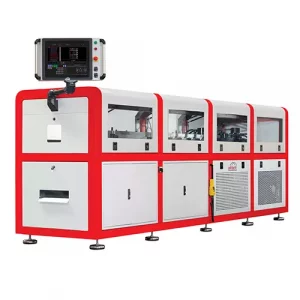
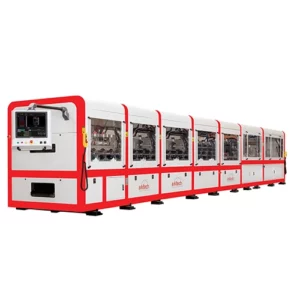
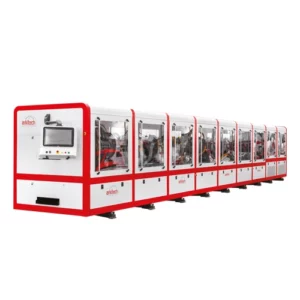
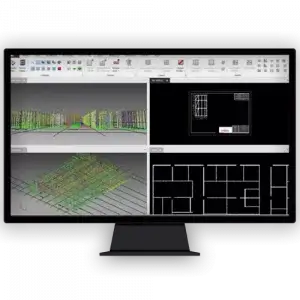
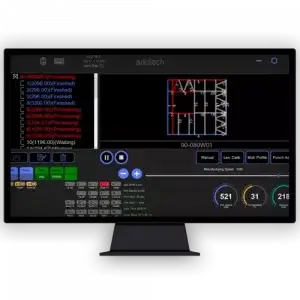
This is where the sustainability story and the execution story converge. Capturing the embodied carbon advantage in practice depends on specifying the right steel, modeling the whole building life cycle, and producing components precisely enough that the waste reduction is real rather than notional. The chain runs from a sustainable material through an optimized digital design to precise manufacturing, and only if each link holds does the reduced material waste show up in the finished building. Connecting structural design directly to manufacturing, so that a validated model becomes machine-ready production data without manual re-drawing, is precisely how the theoretical sustainability of light gauge steel is prevented from leaking away between the model and the factory floor. It is at this design-to-manufacturing seam that Arkitech positions its technology. Arkitech does not produce an EPD or a whole life carbon assessment; those remain the work of qualified assessors and verified data. What its ecosystem supports is the manufacturing precision and data continuity needed to realise these benefits in the built structure and to supply the accurate production data that documenting them depends on.
Where the case needs qualification
A credible sustainability argument names its own limits. Light gauge steel is not automatically low carbon, and three qualifications keep the claim honest. First, steel sourced from a blast-furnace-heavy supply chain carries a materially higher embodied footprint, so the advantage depends on specifying electric arc furnace or high-recycled-content steel with documentation. Second, operational performance depends on correct warm frame detailing; a poorly insulated steel building underperforms. Third, the decisive comparison is always a project-specific whole building life cycle assessment, and where such an assessment shows an optimized timber or concrete alternative performing better for a particular building, that result should govern rather than the general material narrative. Stated plainly, these boundaries are what make the headline case trustworthy to the audience most likely to test it. The strength of light gauge steel is that, specified and executed well, it meets every one of these conditions.
References
- United Nations Environment Programme — Building Materials and the Climate: Constructing a New Future, 2023 — https://www.unep.org/resources/report/building-materials-and-climate-constructing-new-future
- UNEP / GlobalABC — Global Status Report for Buildings and Construction, 2024–2025 — https://www.unep.org/topics/cities/buildings-and-construction
- McKinsey & Company — Accelerating Green Growth in the Built Environment — https://www.mckinsey.com/capabilities/operations/our-insights/accelerating-green-growth-in-the-built-environment
- American Institute of Steel Construction — More Than Recycled Content: The Sustainable Characteristics of Structural Steel — https://www.aisc.org/globalassets/aisc/publications/white-papers/more-than-recycled-content.pdf
- info (SCI / BCSA) — Steel and the Circular Economy — https://www.steelconstruction.info/Steel_and_the_circular_economy
- Zhang, Pan, Teng & Chen — Construction Waste Reduction in Buildings Through Modular and Offsite Construction — ASCE Journal of Management in Engineering, 2024 — https://ascelibrary.org/doi/10.1061/JMENEA.MEENG-5828
- Loizou et al. — Quantifying Construction Waste Reduction Through Modular Construction — Buildings (MDPI), 2021 — https://www.mdpi.com/journal/buildings
- Santos et al. — Thermal Bridging Mitigation in Lightweight Steel-Framed External Walls — ScienceDirect, 2021 — https://www.sciencedirect.com/science/article/abs/pii/S2352710221007518
- RICS — Whole Life Carbon Assessment for the Built Environment, 2nd edition — https://www.rics.org/profession-standards/rics-standards-and-guidance/sector-standards/construction-standards/whole-life-carbon-assessment
- S. Green Building Council — LEED v5 Rating System — https://www.usgbc.org/leed/v5
- European Commission — Carbon Border Adjustment Mechanism (definitive regime, 2026) — https://taxation-customs.ec.europa.eu/carbon-border-adjustment-mechanism_en
- California Building Standards Commission — CALGreen (Title 24, Part 11) — https://www.dgs.ca.gov/BSC/CALGreen
- World Steel Association — World Steel in Figures 2025 — https://worldsteel.org/data/world-steel-in-figures-2025/
- International Energy Agency — Steel (Energy System, Industry) — https://www.iea.org/energy-system/industry/steel

 by
by