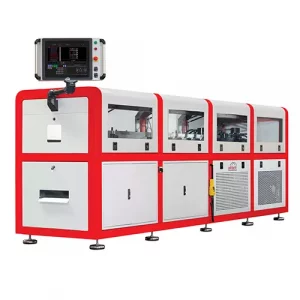
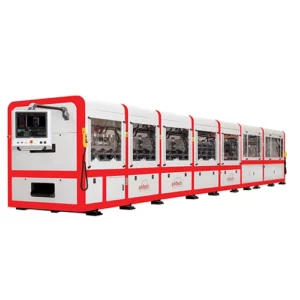
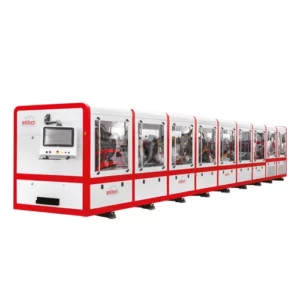
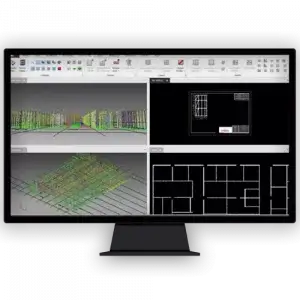
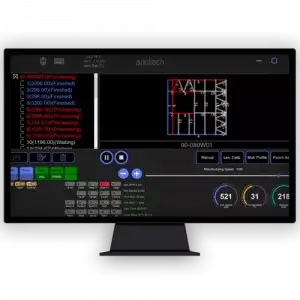


LGS commissioning is the structured process of installing, testing, calibrating, and formally handing over a light gauge steel production line so that the production line can begin controlled, repeatable production in accordance with the specified requirements. On-site training is its companion service, teaching the buyer's own operators, technicians, and designers to run that line safely and consistently inside their own facility.
LGS commissioning and on-site training decide how quickly a new investment turns into sellable output, because the roll former is only one link in the chain that light gauge steel framing systems depend on. Design software, machine controls, tooling, coil, and the people operating them all have to work together within defined machine and product tolerances before a single panel leaves the factory. When that alignment is rushed, the cost appears later as scrapped coil, idle crews, profiles that will not assemble, and frames that struggle to pass inspection. When it is done properly, the plant reaches stable production sooner and the team understands why the machine behaves as it does, not only which buttons to press. The sections below explain what a complete commissioning scope contains, what effective training teaches each role, how safety and documentation fit in, what shortcuts really cost, and which questions manufacturers and modular fabricators should put to suppliers before signing a purchase order.
What LGS Commissioning Covers, From Site Readiness to Handover
Commissioning for light gauge steel framing systems starts well before the supplier’s engineer arrives, because many delays on start-up day can be traced back to an unprepared site. Professional commissioning services usually open with a pre-installation checklist covering floor space and levelness, foundation anchoring, electrical supply and earthing, coil storage and handling, and a workstation for the design and control software. Once the line is positioned, the work typically moves through a fixed sequence of stages, each of which proves something specific about the system:
- Mechanical set-up: Levelling, anchoring, and aligning the decoiler, roll stations, and run-out tables so that the strip runs straight and true.
- Electrical and controls checks: Supply voltage, earthing, emergency stops, guards, and servo or PLC parameters, confirming the machine is safe and responsive.
- Software integration: Installing the design-to-machine software, profile libraries, and test exports so that model data becomes correct punches, notches, and cuts.
- Trial production: Forming members and sample wall panels or trusses from real project files and the buyer's own coil.
- Acceptance and handover: Measuring output, signing the site acceptance record, and issuing manuals, machine settings, and spare-parts lists.
The sequence matters because each stage builds on the one before it. A production file cannot be judged on a machine that is not yet aligned, and trial members mean little until the controls have been verified. For producers new to cold-formed steel construction, insisting that every stage is completed and signed off, rather than compressed into a single demonstration day, is one of the most reliable ways to prevent problems from surfacing months later.
Factory Acceptance Versus Site Acceptance
Many suppliers run a factory acceptance test (FAT) before shipping, and it is a useful first checkpoint. Industry guidance such as the ISPE Baseline Guide describes FAT as partial commissioning and qualification carried out before shipment, while GAMP 5 defines it as an acceptance test performed at the supplier's factory, usually involving the customer. Either way, a FAT confirms that the machine was built as specified, but it cannot show how the equipment behaves after transport, rigging, and connection to local utilities.
That is the role of the site acceptance test (SAT), which verifies that the installed system works with the buyer’s own power supply, environment, and adjacent equipment. Manufacturers should ask framing system suppliers to define SAT criteria in writing before delivery, including which members will be formed, from which coil, and how they will be measured. Agreeing these terms in advance turns acceptance into an objective check rather than a negotiation.
Calibrating Profiles Against Recognised Tolerances
Calibration is the core of commissioning, because roll forming amplifies small set-up errors. Writing in The Fabricator, roll-forming specialist Steve Ebel recommends keeping the alignment between the bottom and top shaft hubs within 0.002 in, and the bottom shaft alignment from the first to the final station within 0.005 in. A misaligned machine, he notes, changes the roll gap and with it the product shape.
Accuracy should then be judged against a published benchmark rather than a brochure figure. In North America, AISI S240 sets manufacturing tolerances for cold-formed structural framing members, while in Europe EN 1090-4 defines the technical requirements for cold-formed structural steel elements used in roof, ceiling, floor, and wall applications. As a commissioning best practice, trial runs can include members produced from more than one representative coil, with service holes and cut lengths compared directly with the design file before any frame reaches the steel framing installation stage.
What On-Site Training Covers for Each Role
Effective on-site training for light gauge steel framing systems is role-based, because the person loading coil, the technician changing a punch, and the detailer exporting machine files need very different skills. Training on the buyer's own machine, inside the buyer's own plant, also exposes local conditions such as coil variation, power quality, or workflow bottlenecks that a classroom course would never reveal. Root-cause experience in roll forming points the same way: The Fabricator traces many production challenges to poor documentation of best practices, insufficient machine and tooling maintenance, and a lack of training. A well-scoped programme usually distributes content as follows:
- Machine operators: Start-up and shutdown, coil loading and threading, running jobs from the controller, first-off measurement, and basic fault clearance.
- Maintenance technicians: Lubrication routines, roll and blade inspection, encoder and sensor checks, and planning of critical spare parts.
- Design and software users: Modelling walls, floors, and roof trusses, running engineering checks, and exporting clean production files.
- Supervisors and quality staff: Reading setup sheets, sampling and measuring output, labelling finished members, and recording deviations.
Duration depends on the complexity of the line and the experience of the team. A crew moving over from timber or masonry often needs support through its first live projects, not only during the commissioning week, so phased training with a scheduled follow-up visit can often deliver better results than a single intensive session. In many operations, the practical goal is a production team that can run the line, resolve routine faults, and release accurate members for steel framing installation without calling the supplier for everyday decisions.
Software and Design-to-Machine Training
In modern production, the software is where many errors either start or are prevented. Designers need to understand how profile libraries, connection details, and service-hole rules translate into machine instructions, because a wrong setting in the model will be reproduced faithfully on every member. Training should therefore cover the full path from architectural input to production file, including how to check a file before it reaches the machine.
This part of the curriculum is often underestimated during purchase, yet it can shape long-term productivity as much as operator speed does. Including software sessions within the commissioning services scope, with exercises based on the buyer's real projects, gives designers and operators a shared language for diagnosing problems when output does not match the drawing.
Where Installation Support Is in Scope
Machine commissioning ends at the factory gate, but the value of accurate members is only realised on site. Where installation support forms part of the supplier's scope, or is purchased as a separate service, training can follow the product into erection. The Steel Construction Institute's best-practice sheet ED029 illustrates the level of detail involved: wall panels need a minimum of one temporary inclined strut each, typically at a maximum spacing of 3 m, and should be erected in rectangular blocks rather than long linear runs.
The same guidance notes that site modifications need the frame manufacturer's prior agreement and that gaps beneath wall panels greater than 20 mm must be referred to the structural engineer. Buyers new to cold-formed steel construction should therefore confirm early whether installation training is included, optional, or outside the commissioning scope altogether.
Safety, Documentation, and Knowledge Retention
Safety training is an essential part of commissioning because a roll-forming line combines rotating rolls, punches, shears, and automated motion in a single production system. OSHA's guidance on safeguarding equipment identifies in-running nip points at the in-feed of roll-forming machines and states that only trained employees should operate machinery. In the United States, the lockout/tagout standard 29 CFR 1910.147 further requires employers to train authorized employees to recognise hazardous energy sources and the means of isolating them, to retrain when equipment or procedures change, and to certify that training has taken place. Other jurisdictions impose their own machinery-safety and energy-isolation requirements, so training and procedures should always be aligned with the regulations applicable at the installation site. A complete safety and documentation package should include:
- Lockout/tagout procedures written for the specific machine, with every energy source identified.
- Guarding and emergency-stop checks recorded during commissioning.
- Setup sheets for each profile, so operators can find the correct tooling without asking anyone.
- Maintenance schedules, lubrication charts, and a critical spare-parts list.
- Training records showing the name of each participant and the dates of training.
Documentation is also how knowledge survives staff turnover. When procedures are written down rather than held in one experienced operator's head, a new hire can be brought up to speed through structured on-site training instead of trial and error. For plants scaling cold-formed steel construction output across several shifts, that consistency becomes as valuable as the machine itself.
What Rushed Commissioning Really Costs
Under schedule pressure, some buyers treat commissioning as a formality to finish quickly, yet in light gauge steel framing systems a small set-up error can repeat across thousands of parts before anyone notices. A roll former that is a fraction of a millimetre out of alignment may not produce one faulty stud but a whole shift of them. The most common consequences of compressed or incomplete commissioning services include:
- Scrap and rework, as out-of-tolerance profiles, misplaced service holes, and wrong cut lengths consume coil and labour.
- Assembly problems, with studs that will not seat in tracks and panels that must be forced together on site.
- Uneven roll wear, which The Fabricator links directly to tooling pairs that are not lining up as they should.
- Unplanned downtime from jams, tooling damage, and electrical faults that trained staff would have caught early.
- Low adoption, as operators who lack confidence fall back on manual methods and leave automation underused.
- Compliance exposure, when members outside code tolerances fail inspection or certification audits.
The financial logic is straightforward. A production line earns its return only when it delivers sellable frames at planned speed, so every week spent troubleshooting can push payback further away. A thorough start-up can shorten that ramp-up period, give the team confidence in its own measurements, and create a documented baseline that keeps later quality discussions with framing system suppliers factual rather than contentious. For modular fabricators working to fixed delivery slots, that predictability can matter as much as the headline speed of the machine.
Questions to Ask Framing System Suppliers Before Purchase
When buyers compare framing system suppliers for light gauge steel framing systems, machine price alone hides the largest variable in a new plant's ramp-up: the depth of support after delivery. As Rollforming Magazine puts it, support is no longer something that kicks in after the sale but part of the product itself, and it deserves the same scrutiny as forming speed. Asking every vendor to answer the same questions in writing makes offers directly comparable:
- What exactly is included in the commissioning scope, how many engineer-days are covered, and who pays for travel and accommodation?
- Which site preparations must be completed beforehand, and what happens if the site is not ready on the agreed date?
- Will acceptance runs use our own coil and project files, and against which tolerance standard will output be measured?
- How many staff can attend training, in which languages, and does the programme include design software as well as machine operation?
- Is follow-up support available during the first live projects, through return visits or remote diagnostics?
- What documentation, setup sheets, spare parts, and maintenance schedules are delivered with the line?
The answers say as much about a supplier's process as about its machine. A vendor that can share a sample commissioning plan, a written on-site training curriculum for each role, and the acceptance record it uses at handover is showing that start-up is a repeatable procedure rather than an improvised visit. Vague answers, or a training offer expressed only as a number of days, are worth probing further before the purchase order is signed.
Commissioning as the Start of a Long-Term Partnership
The most useful way to view commissioning is not as the last step of a purchase but as the first step of operating light gauge steel framing systems profitably. Accuracy, software, safety, and skills are not separate deliverables. They reinforce one another, and a weakness in any one of them limits the rest. A precisely aligned machine still underperforms if designers export flawed files, and a well-trained crew still loses time if spare parts and remote support are slow to arrive. Before signing a purchase order, manufacturers should be able to confirm three things:
- A written commissioning plan with measurable acceptance criteria.
- A role-based training programme covering machine operation, maintenance, software, and safety, with any installation support clearly scoped.
- A defined support model for the months after handover.
Seen this way, commissioning is the point where a machine purchase becomes a working production capability, and the quality of that transition can shape how steel framing installation projects run for years afterwards. At Arkitech, this integrated approach shapes how we support customers from machine installation through software adoption, training, and ongoing production support.
References
Data points in this article are drawn from the following standards, safety regulations, and industry publications:
- American Iron and Steel Institute, AISI S240-20 — North American Standard for Cold-Formed Steel Structural Framing (SFIA library copy). https://www.steelframing.org/assets/Library/Standards/AISI-S240-20.pdf
- BSI — BS EN 1090-4:2018 Execution of steel structures and aluminium structures: Technical requirements for cold-formed structural steel elements and cold-formed structures for roof, ceiling, floor and wall applications. https://www.thenbs.com/publicationindex/documents/details?Pub=BSI&DocID=324775
- The Steel Construction Institute — Best Practice for Light Steel Framing: Installation, Technical Information Sheet ED029 (2015). https://steel-sci.com/assets/downloads/LSF/ED029%20Download.pdf
- Ebel, S. (2018) — Set up for roll forming success, The Fabricator. https://www.thefabricator.com/thefabricator/article/rollforming/set-up-for-roll-forming-success
- Kneat — FAT vs. SAT: What's the difference and why both matter in equipment qualification (citing the ISPE Baseline Guide and GAMP 5, Second Edition). https://kneat.com/article/the-difference-between-a-fat-and-a-sat/
- Occupational Safety and Health Administration — 29 CFR 1910.147, The control of hazardous energy (lockout/tagout). https://www.osha.gov/laws-regs/regulations/standardnumber/1910/1910.147
- Occupational Safety and Health Administration — Safeguarding Equipment and Protecting Employees from Amputations (OSHA 3170). https://osha.gov/sites/default/files/publications/osha3170.pdf
- Rollforming Magazine — Evaluating Equipment Beyond Day One: Why Support Matters Over the Long Haul. https://rollformingmagazine.com/evaluating-equipment-beyond-day-one-why-support-matters-over-the-long-haul/

 by