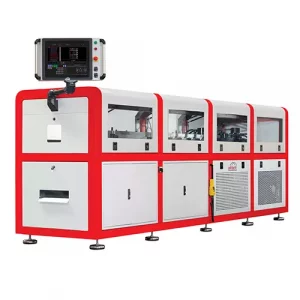
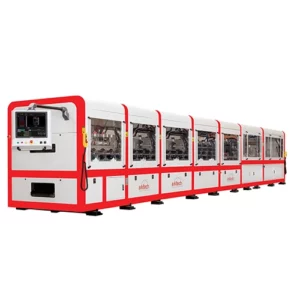
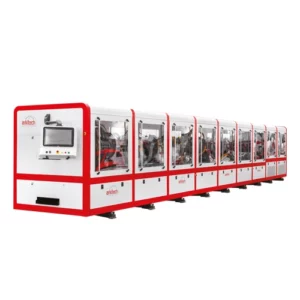
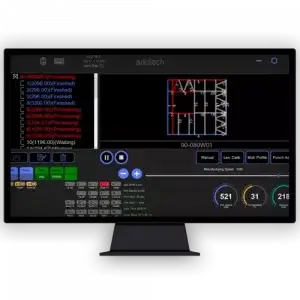


High-efficiency light gauge steel framers are redefining how manufacturers approach speed, accuracy, and scalability in 2026. As offsite construction, modular production, and industrial steel profiling continue to grow, production output is no longer driven by labor intensity alone. It is driven by process efficiency, data accuracy, and production-ready framer systems designed for continuous manufacturing.
What Defines a High-Efficiency Light Gauge Steel Framer?
A high-efficiency light gauge steel framer is not defined by speed alone. True efficiency comes from the ability to maintain consistent output, minimal downtime, and precision profiling across long production cycles.
Key characteristics include:
- Optimised material feeding and profile handling
- High-precision punching, cutting, and forming accuracy
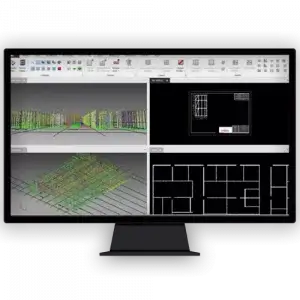
- Seamless integration with design and production data
- Stable output at high throughput levels
- Reduced manual intervention during operation
Efficiency is measured not only by how fast a framer runs, but by how reliably it delivers production-ready steel profiles without interruptions or rework.
Why Production Capacity Is the Key Focus in Modern Light Gauge Steel Manufacturing?
In 2026, steel framing manufacturers face increasing pressure from:
- Shorter delivery timelines
- Higher project volumes
- Rising labor and energy costs
- Demand for consistent profile quality
Production output has become the key performance indicator that directly impacts profitability. High-efficiency light gauge steel framers address this by enabling manufacturers to:
- Produce more linear meters per shift
- Maintain stable quality at scale
- Reduce bottlenecks between design and production
Instead of focusing on peak speed, modern facilities focus on sustained, repeatable output.
How High-Efficiency Framers Increase Throughput Without Compromising Accuracy
Higher throughput often leads to quality risks when systems are not designed for efficiency. High-efficiency framers solve this by aligning mechanical performance with software-driven control.
They achieve this through:
- Precise synchronisation between punching, cutting, and forming stages
- Consistent tolerance control across different profile types
- Automated process flows that minimise manual adjustments
This balance allows manufacturers to increase output without sacrificing dimensional accuracy, which is critical for downstream assembly and modular construction workflows.
Reducing Downtime Through Production-Oriented Framer Design
Downtime is one of the biggest obstacles to higher output. High-efficiency light gauge steel framers are engineered to minimise both planned and unplanned stoppages.
Efficiency-driven design focuses on:
- Robust mechanical structures that support continuous operation
- Simplified tooling and maintenance access
- Predictable performance under high workload conditions
By reducing changeover time and maintenance interruptions, manufacturers can maintain longer effective production hours per day, directly increasing total output.
Scaling Output for Modular and Offsite Manufacturing
Modular and offsite manufacturing demand consistent output across repeated production cycles. High-efficiency light gauge steel framers are particularly well suited to this environment.
They support scalability by:
- Handling varied profile geometries without performance loss
- Maintaining accuracy across large batch sizes
- Supporting continuous production for modular systems
As modular construction continues to expand globally, framers that deliver repeatable efficiency at scale become a strategic asset rather than just a production tool.
How Production Efficiency Creates Competitive Advantage in Light Gauge Steel Manufacturing?
In competitive markets, production efficiency directly impacts delivery times, cost structures, and customer satisfaction. Manufacturers using high-efficiency framers gain advantages such as:
- Faster response to project demand
- Greater flexibility in production planning
- More predictable delivery schedules
These benefits allow steel framing producers to compete on reliability and scalability, not just price.
The Role of High-Efficiency Framers in 2026 and Beyond
As steel framing production continues to industrialise, efficiency will remain the defining factor of successful operations. High-efficiency light gauge steel framers are no longer optional upgrades. They are core production infrastructure.
In 2026, manufacturers who prioritise efficiency-focused framer systems are better positioned to:
- Increase production output sustainably
- Adapt to growing modular and offsite demand
- Maintain precision while scaling operations
High-efficiency light gauge steel framers enable manufacturers to move from reactive production toward stable, optimised, and future-ready steel framing operations.
Strengthen Your Production Capacity with the Right Framing Technology
Increasing production capacity in light gauge steel manufacturing is not about pushing systems harder. It is about using high-efficiency profile framers designed for stable output, precision, and scalability. Arkitech develops advanced light gauge steel framers and integrated software solutions tailored to the needs of modern, production-oriented facilities.
To discover the right framing technology to support your production capacity, contact Arkitech.
Check out our LinkedIn page for more.

 by
by