

Production variability is one of the most underestimated risks in light gauge steel manufacturing. Even small deviations in profile dimensions, punching accuracy, or forming consistency can create downstream issues in assembly, modular integration, and structural performance.
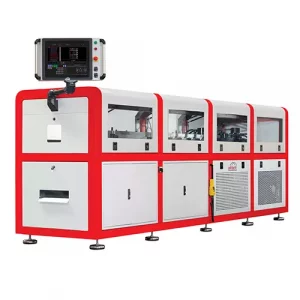
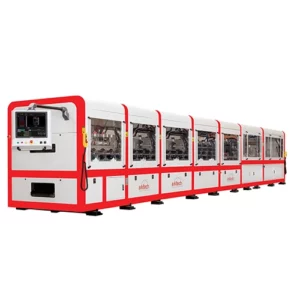
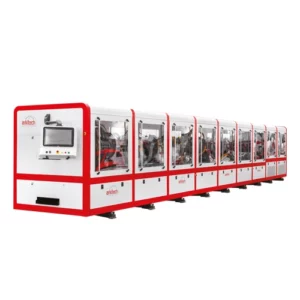
In modern production environments, achieving speed or volume alone is not enough. Manufacturers increasingly prioritise stability, repeatability, and predictable output. This is where high-efficiency light gauge steel framers play a decisive role.
What Is Production Variability in Light Gauge Steel Manufacturing?
Production variability refers to inconsistencies that occur when the same profile design produces different physical results across runs, shifts, or operators. These variations may appear as:
- Dimensional deviations between identical profiles
- Inconsistent punching or cutting accuracy
- Fluctuating tolerances across batches
- Output differences caused by manual adjustments or setup changes
In light gauge steel manufacturing, such variability directly affects assembly accuracy, installation speed, and overall project reliability. For manufacturers serving prefabricated, modular, or multi-storey building systems, variability quickly becomes a structural and operational risk.
Why Consistency Matters More Than Peak Performance?
While peak speed often attracts attention, consistent performance is what defines industrial-grade manufacturing. A production line that delivers accurate profiles at one moment but deviates under load, different speeds, or extended operation creates uncertainty.
High-efficiency light gauge steel framers are designed to prioritise:
- Stable performance over long production cycles
- Repeatable accuracy regardless of throughput level
- Predictable results across different shifts and operators
Consistency ensures that every profile leaving the framer matches the design intent, enabling smoother downstream processes and reducing corrective work.
How High-Efficiency Framers Reduce Operator-Dependent Variations?
Manual intervention is one of the primary sources of variability in steel framing production. Differences in operator experience, adjustment timing, or setup interpretation can introduce inconsistencies.
High-efficiency light gauge steel framers address this by:
- Minimising manual adjustments during production
- Automating critical process controls
- Maintaining stable forming conditions throughout operation
By reducing dependency on operator input, production becomes more standardised. This allows manufacturers to achieve uniform output regardless of who is operating the system.
Mechanical Stability for Consistent Profile Production
Eliminating variability starts with mechanical design. High-efficiency light gauge steel framers are engineered to maintain stability under continuous workloads and varying production speeds.
Key Elements That Ensure Mechanical Stability
- Rigid machine structures designed for sustained operation
- Controlled material feeding and profile guidance
- Synchronized punching, cutting, and forming processes
When mechanical systems operate without fluctuation, tolerance control remains consistent, and dimensional accuracy is preserved across all profiles.
The Key to Reliable Production in Modular and Prefabricated Systems
Modular and prefabricated construction systems depend on precise alignment between components. Even minor dimensional differences can disrupt assembly workflows or compromise structural performance.
High-efficiency light gauge steel framers support these systems by:
- Delivering uniform profiles across large batch sizes
- Maintaining accuracy throughout repeated production cycles
- Ensuring compatibility between factory-produced components
This level of consistency allows manufacturers to scale production without sacrificing reliability, making high-efficiency light gauge steel framers a critical asset in industrialised construction environments.
From Variable Output to Reliable Manufacturing Performance
Eliminating production variability is not a result of isolated improvements. It requires a system-level approach where mechanical stability, automation, and data-driven control work together.
Manufacturers using high-efficiency light gauge steel framers benefit from:
- Reduced rework and corrective processes
- More predictable production planning
- Greater confidence in delivery timelines and quality standards
Over time, this reliability strengthens operational performance and positions manufacturers for sustainable growth.
Build Consistent Production with the Right Framing Technology
Consistency in light gauge steel manufacturing is not achieved by pushing systems harder. It is achieved through high-efficiency light gauge steel framers designed for stable, repeatable, and controlled production.
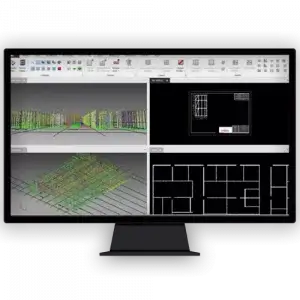
Arkitech develops advanced framing technologies and integrated software solutions for manufacturers seeking to eliminate production variability and achieve reliable production outcomes. To evaluate the right framer technology for your production environment, you can contact Arkitech.
Check out our LinkedIn page for more.

 by
by