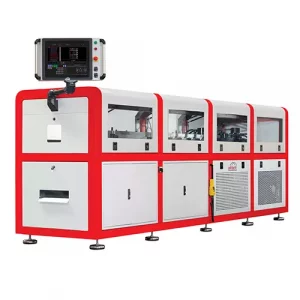
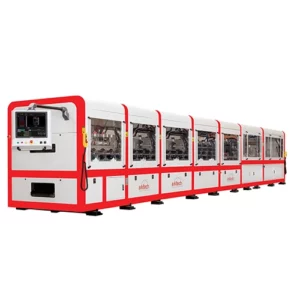
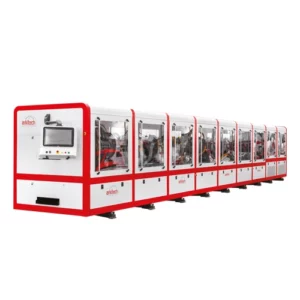


Cold-Formed Steel Framers achieve industrial performance not only through automation but through precision engineering integrated into every stage of production. From mechanical tolerances to servo-driven punching systems, engineering accuracy determines production consistency, dimensional stability, and long-term operational reliability. In modern structural manufacturing—especially in Light Gauge Steel (LGS) production—precision is the foundation of scalable and repeatable output.
Why Precision Engineering Matters in CFS and LGS Production
Cold-formed steel production depends on strict dimensional control. Even minimal deviations in profile geometry can affect:
- Panel assembly alignment
- Structural load distribution
- Installation efficiency
- Downstream prefabrication accuracy
For manufacturers operating in Light Gauge Steel (LGS) panel systems, dimensional stability is critical. High-performance cold-formed steel framers must therefore be engineered with exact mechanical tolerances and synchronized digital control systems.
Precision engineering ensures that each produced profile matches its digital design specifications with minimal variance.
Mechanical Accuracy: The Core of Cold-Formed Steel Framers
At the heart of every advanced Cold-Formed Steel Framer lies mechanical stability. Engineering precision begins with:
Roll Form Tooling Design
- Progressive forming stages must maintain consistent pressure distribution
- Tool alignment must prevent profile distortion
- Roller geometry must be optimized for specific profile ranges
Improper mechanical design can lead to profile twisting, dimensional drift, or material stress accumulation.
Structural Frame Rigidity
Machine chassis design influences vibration control and forming stability. Rigid structural architecture reduces:
- Dynamic deflection
- Micro misalignments
- Long-term wear inconsistencies
In high-volume LGS production lines, even minor structural instability can affect thousands of profiles.
Servo-Driven Punching and Positioning Accuracy
Punching precision plays a critical role in both Cold-Formed Steel and Light Gauge Steel (LGS) systems. Modern framers utilize servo-controlled punching units to achieve:
- Exact hole placement
- Repeatable slot positioning
- Synchronization with digital design data
Servo systems enable micro-level positioning control. This ensures that structural connection points align accurately during panel assembly and modular construction processes.
Inaccurate punching can compromise installation speed and structural performance in prefabricated and industrial projects.
Tolerance Control and Profile Consistency
Dimensional tolerances define production quality. Advanced Cold-Formed Steel Framers are engineered to maintain:
- Consistent web width and flange depth
- Controlled profile thickness handling
- Stable forming geometry across production cycles
Tolerance control is particularly important in Light Gauge Steel (LGS) framing systems, where profiles are integrated into complete structural panel systems. Precision reduces the need for manual correction and minimizes assembly delays.
Digital Integration: Engineering Meets Software
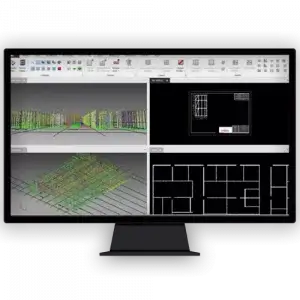
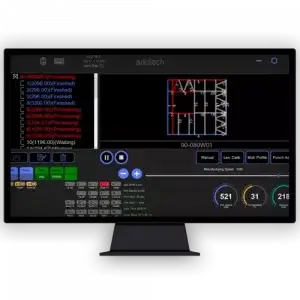
Modern Cold-Formed Steel Framers combine mechanical engineering with intelligent production software.
Integrated systems manage:
- Profile design parameters
- Punch sequence programming
- Production speed optimization
- Error monitoring and diagnostics
In LGS technology environments, seamless integration between design software and framer software reduces data translation errors and production inconsistencies.
Digital precision enhances:
- Production traceability
- Real-time performance analysis
- Predictive maintenance planning
This combination of mechanical and digital accuracy defines next-generation manufacturing performance.
Material Behavior and Engineering Calibration
Precision engineering also considers material characteristics.
Cold forming processes must account for:
- Steel elasticity
- Springback effects
- Thickness variability
- Galvanized coating behavior
Proper calibration ensures that final profile geometry remains within defined tolerances even after mechanical deformation.
Precision as a Competitive Advantage
Manufacturers investing in high-precision Cold-Formed Steel Framers gain measurable operational advantages:
- Reduced scrap rates
- Lower rework requirements
- Improved panel assembly speed
- Higher production scalability
- Consistent product quality
Precision engineering transforms automation into predictable industrial output.
Arkitech designs advanced Cold-Formed Steel Framers that integrate robust mechanical architecture with intelligent production software. This engineering approach supports manufacturers operating in Light Gauge Steel (LGS) environments, enabling accurate, scalable, and efficient steel profile production.
Elevate Precision in Your Production
In Cold-Formed Steel Framers, precision engineering defines not only quality, but also production speed, scalability, and long-term operational stability. The right machinery combined with integrated software ensures sustainable performance in Light Gauge Steel (LGS) manufacturing.
Contact Arkitech to strengthen your production line with higher precision and efficiency.
Check out our LinkedIn page for more.

 by
by