

Why Faster Means Cheaper
In light gauge steel construction, the most common cost mistake is made before a single panel is rolled. A contractor compares two framing bids, sees that the steel package costs more per square foot than wood, and stops there. That comparison feels rigorous. It is, in fact, the wrong calculation entirely. The price of a framing system is not the cost of owning a building, and the two numbers can point in opposite directions.
Total Cost of Ownership (TCO) is the discipline of counting what a building actually costs across its life: not just materials and on-site labour, but the financing that accrues every week a project remains unfinished, the insurance premiums that hinge on what the structure is made of, the waste hauled to landfill, the rework that flows from miscommunication, the decades of maintenance, and the residual value of the materials at end of life. Seen through that lens, a striking pattern emerges in LGS and LGSF construction. The faster system is usually the cheaper system, even when its sticker price is higher. Speed is not a luxury bought at a premium. It is the mechanism through which the premium is repaid, and then some.
For contractors, developers, engineers, and investors, this reframing changes which projects pencil out and which framing system wins the bid. The argument that follows assembles the evidence: how TCO is formally defined, why first-cost comparisons mislead, and how each component of total cost, from financing, labour, and waste to durability, rework, and time-to-revenue, bends toward the conclusion that in industrialized steel construction, faster means cheaper.
First cost is not total cost, and the standards say so
The idea that owning an asset costs more than buying it is not a marketing flourish; it is codified in international standards. ISO 15686-5, the life-cycle costing standard for buildings and constructed assets, requires analysts to account for cash flows arising from acquisition through operation to disposal, and distinguishes narrow life-cycle costing from broader whole-life costing that captures income and externalities. Its American counterpart, ASTM E917, defines a method that measures, in present-value terms, the sum of all relevant costs of owning and operating a building over a defined study period.
One sentence in the ASTM practice is, in effect, the thesis of this article: the method is particularly suitable for determining whether the higher initial cost of a building or building system is economically justified by reductions in future costs. That is precisely the question cold-formed steel poses. The standards exist because the construction industry has long known that the cheapest bid and the cheapest building are frequently not the same thing. What has changed is that the tools to quantify the gap, and the software to act on it, are now mature.
The first-cost premium is real, and smaller than it looks
Begin with the number sceptics cite. On a framing-only basis, cold-formed steel does cost more than wood. A widely referenced study commissioned by the Steel Framing Industry Association and prepared by R.A. Smith, published via BuildSteel, costed a five-storey, roughly 50,000-square-foot mixed-use multifamily building. The CFS framing package came in at about $26.50 per square foot against $21.90 for wood, a premium of roughly 21%. Taken alone, that figure ends most conversations in wood’s favour.
But framing is only about a fifth of total building cost. Once the comparison is drawn at the whole-building level, the same study found total costs of roughly $6.42 million for steel versus $6.26 million for wood, a difference of about $58,000, or 0.9%. And when construction insurance is added, the variance narrows to less than 1%, with the owner saving more than $100,000 in premiums by framing in non-combustible steel rather than wood, per BuildSteel. A 21% line-item premium becomes a sub-1% building premium, and the gap keeps closing as more cost categories enter the frame.
The honest counterweight comes from an older HUD study of single-family homes, which found a steel-framed house about 14.2% more expensive than an identical wood one, even though framing labour hours were only 4.3% higher. The lesson is not that steel is always at parity on first cost. It is that the size of the premium depends heavily on building type, and that the premium shrinks dramatically the moment the analysis widens from the framing package to the building, and then to the building’s life. Mid-rise multifamily, where insurance and speed matter most, is where steel’s case is strongest.
Speed is the master lever, because time is priced
The largest savings in steel construction do not come from the steel. They come from the calendar. Prefabricated light gauge steel framing can reduce framing time by up to 50% versus traditional methods, with industry analysis from Consac putting LGS at 25–35% faster than timber or concrete. The most authoritative independent benchmark comes from McKinsey, whose study of modular and off-site construction found projects completed 20–50% faster than traditional on-site builds, with leading firms realizing more than 20% in construction-cost savings at scale and up to 80% of labour activity moved off-site, as reported by Construction Dive.
Why does compressing the schedule compress the cost? Because a large share of construction spending is time-priced rather than quantity-priced. Preliminaries and general conditions (site supervision, temporary facilities, equipment rental, security, utilities) typically run 8–15% of project cost and accrue every single week the site is open. Shave weeks off the programme and those costs fall directly, without any change to the design. Because steel components are fabricated in a factory while groundwork proceeds on site, two timelines that run sequentially in conventional construction can run in parallel, as Network Framing notes.
The financing clock: interest is the hidden second contractor
Every unfinished building is borrowing money. As of 2025–2026, construction loans generally carry rates of roughly 6.5–9% through banks and considerably higher through private lenders, with industry data compiled by New Silver showing speculative single-family construction loan rates above 12% in recent NAHB surveys. Interest during construction is paid on drawn funds for the full duration of the build. Shorten a fifteen-month programme to eight, and roughly seven months of carrying cost simply disappears.
The developer’s arithmetic compounds the effect. Real-estate analyses of project delay routinely find that each month of slippage erodes internal rate of return by something on the order of 0.1 to 0.3 points, while a stalled multifamily asset forgoes hundreds of thousands of dollars in monthly rent that it can never recover. A 250-unit property at $1,800 per unit represents roughly $450,000 in gross potential revenue every month it sits unleased, per REI Prime. Faster delivery does not merely save interest; it pulls forward the entire revenue stream, and earlier cash flows are discounted less. For an investor, time-to-revenue is not a soft benefit. It is the single most powerful driver of returns.
Labour: scarce, expensive, and shifted off-site
Labour is both one of the largest cost categories in construction, commonly 20–40% of total cost, and the one under the most acute supply pressure. The Associated Builders and Contractors estimated the industry needed to attract over 400,000 net new workers in 2025 alone to balance supply and demand, a shortfall that pushes wages up and timelines out. Prefabricated steel is a direct structural response: by moving fabrication into a controlled factory, CFS construction can cut on-site labour by 40–60% versus traditional framing, according to Network Framing, with contractors in supply-constrained markets reporting 15–20% reductions in on-site headcount through panelization and modular methods, per ABLEMKR.
The cost logic is twofold. Fewer on-site hours means lower direct labour cost in an environment of rising wages. And because factory work is insulated from weather, site congestion, and trade-stacking, it removes a major source of the delays that, as we have seen, carry their own financing and revenue penalties. Light gauge steel sections, roughly a third the weight of equivalent timber, pre-punched and self-locating to fractions of a millimetre, let smaller crews assemble faster with less specialized skill, which is exactly what a labour-short market requires.
Material efficiency: worth more in a high-tariff world
Precision manufacturing also attacks waste. Roll-formed steel produces as little as 2% scrap, against the 15–20% material waste typical of wood framing from warping, miscuts, and handling damage, with Network Framing reporting that steel framing generates only a fraction of the waste timber does. In ordinary times this is a modest line item. In 2025 and 2026 it became strategic. After Section 232 tariffs on imported steel doubled to 50% in mid-2025, and were subsequently restructured to apply to the full customs value of covered products, as documented by White & Case, the price of wasted steel rose sharply, with mill products up more than 20% year-over-year by early 2026 per Ram Steel.
This produces a counterintuitive but important result: tariffs raise the cost of steel and simultaneously raise the value of using it efficiently. A system that wastes 2% of an expensive material can outperform one that wastes 18% of a cheap one. Material optimization, high utilization rates, and the recycled content of domestically produced cold-formed steel, a minimum of 25% recycled content, fully recyclable at end of life, per BuildSteel, become hedges against precisely the input-cost volatility that worries every contractor pricing a job today.
The long tail: durability, insurance, and end-of-life value
TCO extends decades beyond handover, and this is where steel’s profile compounds. Galvanized cold-formed steel is engineered for service lives of 50 to 70 years and more in sheltered applications, reaching well beyond a century in benign environments, with the zinc coating providing sacrificial corrosion protection. Steel does not rot, warp, shrink, or feed termites and mould, which translates directly into lower maintenance and repair spending over a building’s life.
Non-combustibility carries a particularly tangible payoff in insurance. Trade reporting in Walls & Ceilings documents a hotel project whose builders’-risk premium fell from roughly $450,000 to $92,000, nearly 80%, after switching from wood to cold-formed steel framing. At the end of the building’s life, steel retains residual value that timber and concrete lack, being 100% recyclable without degradation in quality, per BuildSteel. A frank caveat belongs here: peer-reviewed life-cycle assessments, such as the review published in Frontiers in Built Environment, generally find timber lower than steel in embodied energy and carbon. Steel’s TCO case rests on durability, speed, insurance, waste, and recyclability, not on embodied-carbon superiority, and an honest analysis says so.
The hidden costs: rework, change orders, and the overrun epidemic
Some of the largest costs in construction never appear on a framing bid at all. Rework, the redoing of what was built wrong, runs at roughly 5% of total project cost on average according to the Construction Industry Institute, with the Construction Disconnected study attributing more than $31 billion in annual U.S. rework to miscommunication and bad data, and finding that nearly half of all rework traces to those two causes. Change orders compound the problem, typically adding 8–15% to contract value on major projects, as Rhumbix and Construct Two document, with the great majority of projects finishing over budget.
At the largest scale the numbers become extraordinary. McKinsey has found that 98% of megaprojects suffer cost overruns exceeding 30%, while a later analysis of more than 500 projects in McKinsey‘s pre-construction research put average cost overruns around 79% and schedule delays above 50%. These failures share root causes, including design errors, field variability, and broken coordination between trades, that factory-based, digitally-driven steel construction is specifically structured to eliminate. When a component arrives pre-engineered from a model and fits the first time, the most expensive category of construction cost is designed out before anyone reaches the site.
Why this is ultimately a software advantage
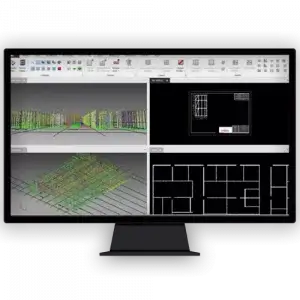
None of these savings are automatic. They are unlocked by the digital layer that connects design to manufacturing. Building information modelling integrated with prefabrication has been shown across multiple industry studies to deliver up to 20% cost savings and 15–20% reductions in waste, with formwork waste falling 60–70% when BIM and prefabrication are properly aligned. The reason is structural: light gauge steel is manufactured directly from a digital model, with pre-punched, self-jigging components accurate to fractions of a millimetre. The model is the factory instruction set, the quantity take-off, and the clash-detection record all at once. Errors that would otherwise surface as field rework are caught and corrected before fabrication begins.
This is the gap Arkitech is built to close. By developing products and software that advance LGS and LGSF technology, from structural optimization and integrated cost modelling to interoperability and lifecycle data management, Arkitech turns the theoretical TCO advantage of steel into a realized one. A framing system can only be as fast, as efficient, and as low-waste as the workflow that drives it. When a structural model flows directly into CNC-ready production data without manual re-entry, when a single design change propagates automatically across drawings, take-offs, and machine files, and when material utilization is optimized before any steel is cut, the speed advantage stops being a claim on a brochure and becomes a number on the closing statement.
Faster means cheaper: the calculation that wins the bid
Assemble the components and the conclusion is hard to escape. The framing premium for cold-formed steel, real at the line-item level, shrinks below 1% at the building level and turns negative once insurance, financing, labour, waste, durability, and rework are counted. Every pressure bearing down on the industry, from steel tariffs and the labour shortage to high interest rates, tightening insurance, and the cost of error, points in the same direction. Each one raises the value of building faster, with less labour, less waste, and fewer mistakes.
The practical implication for anyone evaluating a bid is to stop comparing framing packages on price per square foot and start modelling total cost of ownership: financing carry at the project’s actual loan rate multiplied by its real schedule, insurance quoted for combustible versus non-combustible structures, waste and disposal, rework exposure, and the date revenue begins. Run that calculation, and a framing system that is faster will almost always win, even when its first cost is higher, because in construction, the most expensive thing a project can do is take longer.
The future of light gauge steel construction will not be decided by the price of steel. It will be decided by how completely the industry learns to count. Arkitech’s mission is to provide the digital foundation that lets contractors, developers, and investors see, and capture, the total cost advantage that faster, smarter steel construction has quietly offered all along.
References
- ISO — ISO 15686-5:2017, Buildings and constructed assets — Service life planning — Part 5: Life-cycle costing — https://www.iso.org/standard/61148.html
- ASTM International — E917-17, Standard Practice for Measuring Life-Cycle Costs of Buildings and Building Systems — https://store.astm.org/e0917-17e01.html
- BuildSteel (SFIA / R.A. Smith) — The True Cost of Cold-Formed Steel v. Wood Framing — https://buildsteel.org/why-steel/economics/the-true-cost-of-cold-formed-steel-v-wood-framing/
- HUD User — Steel vs. Wood Cost Comparison: Single Family Residential Construction — https://www.huduser.gov/portal/publications/pdf/steel_vs_wood1.pdf
- McKinsey & Company — Modular construction: From projects to products — https://www.mckinsey.com/capabilities/operations/our-insights/modular-construction-from-projects-to-products
- Construction Dive — Modular can deliver projects 50% faster, McKinsey finds — https://www.constructiondive.com/news/modular-can-deliver-projects-50-faster-mckinsey-finds/557355/
- McKinsey & Company — The construction productivity imperative — https://www.mckinsey.com/capabilities/operations/our-insights/the-construction-productivity-imperative
- McKinsey & Company — Seize the decade: Maximizing value through pre-construction excellence — https://www.mckinsey.com/capabilities/operations/our-insights/seize-the-decade-maximizing-value-through-pre-construction-excellence
- Consac — Cost Analysis: Light Gauge Steel vs. Timber and Concrete — https://consac.com/blogs/cost-analysis-light-gauge-steel-vs-timber-concrete-367
- Network Framing Solutions — Benefits of Prefabricated Steel Framing Systems — https://network-framing.com/benefits-of-prefabricated-steel-framing-systems/
- New Silver — Construction Loan Rates: Full Guide for Investors — https://newsilver.com/construction-loan/construction-loan-rates/
- Associated Builders and Contractors — 2025 Construction Workforce Shortage — https://www.abc.org/News-Media/News-Releases/abc-2025-construction-workforce-shortage-tops-half-a-million
- ABLEMKR — California Construction Workforce Trends 2025 — https://ablemkr.com/california-construction-workforce-trends-2025/
- Ram Steel — How Steel & Aluminum Tariffs Are Affecting Prices in 2026 — https://ramsteelco.com/blogs/news/how-steel-aluminum-tariffs-are-affecting-prices-in-2026-and-how-to-keep-your-project-on-budget
- White & Case — Section 232 Tariffs on Steel and Aluminum Derivative Products — https://www.whitecase.com/insight-alert/section-232-tariffs-steel-and-aluminum-derivative-products
- Walls & Ceilings — 10 Advanced Uses for Cold-Formed Steel Framing — https://www.wconline.com/articles/98159-10-advanced-uses-for-cold-formed-steel-framing
- BuildSteel — What Is Cold-Formed Steel Framing and How Can I Use It? — https://buildsteel.org/why-steel/cold-formed-steel-101/what-is-cold-formed-steel-framing-and-how-can-i-use-it/
- Frontiers in Built Environment — Life cycle energy analysis of residential wooden buildings versus concrete and steel buildings: A review — https://www.frontiersin.org/journals/built-environment/articles/10.3389/fbuil.2022.975071/full
- Construction Industry Institute — Field Rework research (project controls) — https://www.construction-institute.org/resources/knowledgebase/knowledge-areas/project-controls/topics/rt-252
- Autodesk / PlanGrid (FMI) — Construction Disconnected report — https://constructionblog.autodesk.com/construction-disconnected-report/
- Rhumbix — Change Orders in Construction: The Definitive Guide — https://www.rhumbix.com/blog/change-orders-construction-definitive-guide
- Construct Two Group — The Ultimate Guide to Construction Change Orders — https://constructtwo.com/uncategorized/construction-change-orders-guide-2025/
- REI Prime — Lease-Up Phase (Real Estate Investing Glossary) — https://reiprime.com/glossary/lease-up-phase
- Grand View Research — Light Gauge Steel Framing Market Size & Outlook — https://www.grandviewresearch.com/press-release/global-light-gauge-steel-framing-market

 by
by