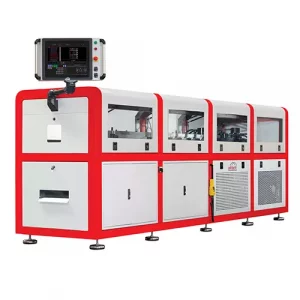
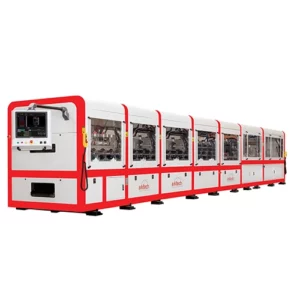
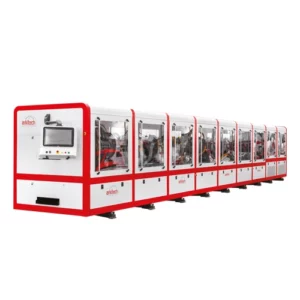
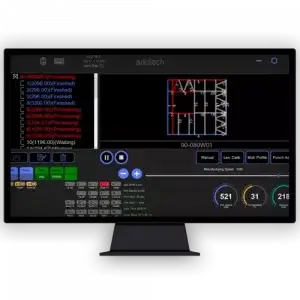


Cold-Formed Steel Framers are advanced roll forming machines that produce structural steel profiles by processing galvanized coils at room temperature through automated forming, punching, and cutting operations. Instead of using heat, the cold forming process relies on progressive mechanical deformation, enabling high dimensional accuracy, repeatability, and efficient industrial-scale steel profile production.
What Is Cold-Formed Steel?
Cold-formed steel (CFS) refers to thin steel sheets that are shaped at room temperature into structural profiles. The material is typically galvanized to improve corrosion resistance and long-term durability.
The cold forming process:
- Uses continuous steel coil feeding
- Passes material through multiple roll forming stations
- Applies mechanical pressure to gradually shape the profile
- Integrates punching and cutting systems for precision detailing
This process produces consistent, lightweight, and high-strength structural components suitable for load-bearing and non-load-bearing applications.
What Are Cold-Formed Steel Framers?
Cold-Formed Steel Framers are automated roll forming systems specifically engineered to manufacture CFS structural profiles. These machines combine mechanical precision with digital control systems to ensure consistent production output.
A typical framer system includes:
- Decoiler and coil feeding unit
- Roll forming stations
- Servo-controlled punching units
- Cutting mechanism
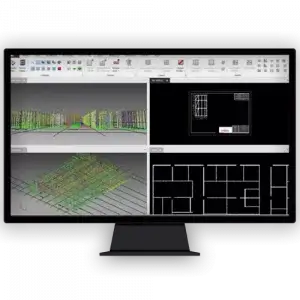
- Integrated control software
Modern framers are designed for high-speed, high-accuracy production with minimal material waste.
Arkitech develops advanced cold-formed steel framers that integrate mechanical engineering with intelligent production software. The company provides machinery and digital solutions that enable manufacturers to produce structural steel components efficiently and at scale.
How Do Cold-Formed Steel Framers Work?
The working principle of cold-formed steel framers follows a structured and automated production sequence.
1. Coil Feeding
Galvanized steel coils are loaded onto the decoiler. The material is unrolled and guided into the forming line under controlled tension.
2. Progressive Roll Forming
The steel strip passes through a series of precision-engineered rollers. Each station gradually bends the material until the final profile geometry is achieved.
3. Punching and Slotting
Servo-controlled punching systems create holes, slots, and service openings according to digital design data. This ensures accuracy and repeatability across production batches.
4. Cutting to Length
Once forming and punching operations are complete, the profile is cut to the required length using integrated cutting systems.
5. Digital Control and Automation
Modern cold-formed steel framers operate through integrated software systems that manage:
- Profile design parameters
- Punch positioning
- Production speed
- Material tracking
- Error monitoring
This automation reduces human intervention and increases production consistency.
Why Precision Matters in Cold-Formed Steel Production
Cold-formed steel framing components must meet strict dimensional tolerances. Even minor deviations can affect assembly quality and structural integrity.
High-quality cold-formed steel framers provide:
- Stable forming geometry
- Accurate punching alignment
- Reduced scrap rates
- Repeatable production output
- Minimal manual adjustments
Precision directly impacts downstream processes such as panel assembly and structural installation.
Advantages of Cold-Formed Steel Framers in Manufacturing
Industrial manufacturers prefer these machines because they provide measurable operational benefits.
- Increased Production Efficiency: Automated systems reduce cycle times and enable continuous production.
- Material Optimization: Progressive forming and precise cutting minimize scrap and material waste.
- Scalable Production: Production lines can be configured for small-scale operations or full industrial-scale manufacturing.
- Software Integration: Digital production management improves traceability and workflow coordination.
Cold-Formed Steel Framers vs Traditional Fabrication Methods
Traditional steel fabrication often involves manual cutting, welding, and heat-based forming processes. These methods can increase labor requirements and production variability.
Cold-formed steel framers offer:
- Faster production cycles
- Lower energy consumption
- Consistent dimensional accuracy
- Reduced dependency on manual labor
The Role of Automation in Modern CFS Framing
Automation is no longer optional in competitive manufacturing environments. Cold-formed steel framers equipped with integrated software platforms enable:
- Design-to-production workflow
- Real-time production monitoring
- Reduced operator error
- Data-driven process optimization
Arkitech designs framer systems that combine mechanical reliability with intelligent digital integration, allowing manufacturers to streamline their steel profile production lines.
Ready to Optimize Your Steel Profile Production?
The right Cold-Formed Steel Framers can significantly improve production accuracy, speed, and scalability. Advanced machinery combined with integrated software creates a more controlled and efficient manufacturing environment.
Contact Arkitech to explore machine solutions tailored to your production requirements.
Check out our LinkedIn page for more.

 by
by